Building a sustainable healthcare system has become an important part of how modern healthcare systems are designed today. Modern hospitals and healthcare professionals are expected to provide high-quality patient care while managing the rising operational costs and limited resources. Also, they have to think about how climate change affects people’s health.
The challenge extends beyond outcomes. According to the World Health Organization, the healthcare systems produce approx 5% of global greenhouse gas emissions, and hospitals generate millions of tonnes of waste every year. So, healthcare sustainability is not about the environment; it’s a problem that the healthcare industry has to solve.
As healthcare systems evolve in 2026, the real question is not about reducing environmental impact. It is about developing resilient, efficient, and future-ready healthcare operations that can continue delivering quality care while using resources responsibly. The strongest systems are being built around stronger foundations for long-term performance, operational stability, and improved patient outcomes.
Why Healthcare Organizations are Prioritizing This System
Healthcare organizations are strongly focusing on sustainability to help both operational performance and long-term resilience. Rising energy costs, supply chain disruptions, workforce challenges, and increasing patient demands are forcing healthcare providers to rethink how they manage resources and deliver care.
Rather than viewing sustainability only as an environmental responsibility, professionals are now starting to see it as a practical strategy for improving efficiency, reducing unnecessary expenses, and strengthening organizational performance. Hospitals that successfully cut down on waste, optimize resource consumption, and improve operational processes are often better positioned to handle future challenges without compromising patient care.
Key Components of a Sustainable Healthcare System
A sustainable healthcare system depends on several components that help organizations operate more efficiently and provide smart care to patients over time. As a result, healthcare sustainability has become a core component of long-term healthcare transformation strategies across the industry.
1. Efficient Use of Resources
A good system uses things like energy, water, medical supplies, and buildings carefully. This helps get rid of waste, control costs, and work better without hurting care.
2. Patient-Centered and Preventive Care
Sustainable healthcare is not about treating people; it is also about stopping problems before they start, helping patients early. AI-powered patient care allows healthcare providers to monitor key metrics, identify inefficiencies, and make more informed decisions based on real-time data.
3. Smarter Procurement and Supply Chains
How organizations buy things affects how much they cost, how much waste they make, and whether they are reliable. A better system pays attention to where things come from, how they are used, and if the supply chain is stable, so things keep working.
4. Better Waste and Emissions Management
Reducing waste and lowering emissions are major parts of making healthcare sustainable. This means getting rid of waste by not making unnecessary waste and making things cleaner and more efficient.
5. Strong Governance and Long-Term Planning
To be organizations need leaders who know what they are doing and have a clear plan. With a plan goal that can be measured and regular checks, healthcare organizations can make sustainability a long-term goal that improves the system.
6. Technology and Data-Driven Decisions
Technology plays a critical role in supporting sustainable healthcare systems by providing greater visibility into operations, resource utilization, and organizational performance.
How to Evaluate Sustainability Gaps Across Healthcare Operations
Before making any changes, hospitals need to know where they are falling short. A green healthcare system can’t be built on guesses. It starts with looking at how each part of the system is doing now and where it’s wasting resources.
- Review energy and water use across facilities: See where you’re using the most, where you’re throwing it away, and which areas need the most help.
- Track waste volume and disposal practices: Find out which areas make the most waste, how you’re handling it, and where you can do better.
- Assess procurement and supply chain decisions: Check how you get things, how they’re packaged, how much you use, and how much you rely on things you only use once to see where you can save money and reduce waste.
- Identify inefficiencies in care delivery: Look for delays, repeated work, wasted resources, and problems that affect both your operations and patient care.
- Evaluate climate resilience and operational readiness: It’s also important to see if your hospital can handle problems like supply issues or hot weather without hurting patient care.
- Measure leadership ownership and reporting systems: Check if your leaders are really behind sustainability and if you have systems to track progress.
This step is important because healthcare sustainability only becomes practical when organizations know what is working and what is not, and where to act first. A proper gap assessment provides a stronger foundation for sustainable healthcare system development by turning broad goals into clear, measurable priorities.
Not sure where to start?
Talk to our experts and see how healthcare sustainability services can fit into your current operations.
How Technology Supports Sustainable Healthcare System Development
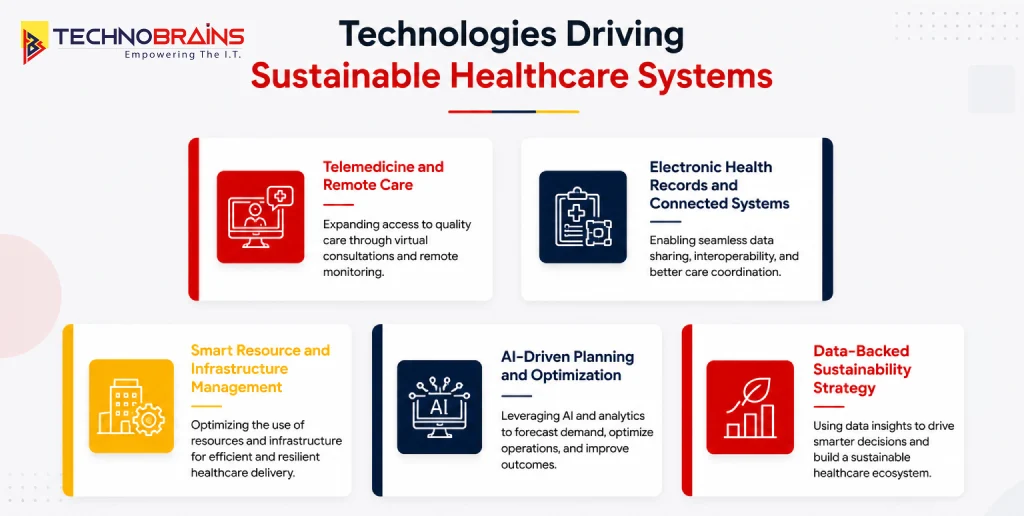
Technology is really changing the way healthcare organizations work. It is making healthcare more practical and easier to manage. This technology improves the way care is delivered, makes operations stronger, and helps systems use resources in a way that, over time. Importantly, it allows healthcare providers to make smarter decisions based on real-time data instead of just using manual processes.
Telemedicine and Remote Care
Telemedicine is very helpful because it reduces the number of hospital visits that are not necessary. It makes care more accessible and flexible for patients. This way of providing care supports an efficient care model, especially for follow-ups and routine consultations. It also helps build a healthcare system with less strain on operations.
Electronic Health Records and Connected Systems
Digital records and connected systems make it easier to share information across teams and departments. This reduces delays. Cut down on duplicate work. It also supports smoother care delivery across the system, which leads to coordination and more efficient workflows.
Smart Resource and Infrastructure Management
Technology helps hospitals track how they use energy, water, equipment, and facilities accurately. With the resource management solutions, it becomes easier to reduce waste, control costs, and improve daily operations without affecting the quality of care.
AI-Driven Planning and Optimization
Artificial Intelligence helps healthcare organizations plan effectively by improving forecasting, capacity planning, and resource allocation. In many cases, AI consultants also help providers figure out where artificial intelligence can create the most value without adding unnecessary complexity or disconnected tools.
Data-Backed Sustainability Strategy
Technology also makes it easier to measure and manage sustainability. It helps teams track progress to spot inefficiencies and support the development of a healthcare system with clearer, more informed decisions that can be improved over time.
Common Barriers to Building a Sustainable Healthcare System
Building a sustainable healthcare system requires more than good intentions. The challenge usually comes from making sustainability work in healthcare environments.
- High Upfront Investment: Many sustainability initiatives require initial investments in infrastructure upgrades, digital technologies, energy-efficient systems, and process improvements. Although these investments often generate long-term savings.
- Fragmented Operations: Sustainability initiatives frequently spread across facilities management, procurement, clinical teams, operations, and executive leadership, which makes alignment and coordination more complex.
- Supply Chain Complexity: Healthcare supply chains are highly complex. Organizations must balance cost control, product availability, and waste reduction while maintaining uninterrupted patient care.
- Waste and Resource Intensity: Hospitals and clinics consume a lot of energy, water, and medical materials every day. This makes it hard to improve efficiency quickly and requires careful planning.
- Limited Data and Measurement: Many healthcare providers lack comprehensive systems for measuring sustainability performance. Without reliable data and reporting mechanisms, identifying opportunities for improvement and tracking progress becomes significantly more challenging.
- Low Climate Resilience Readiness: Some healthcare systems are not fully prepared for climate-related disruptions. This creates added risk for long-term stability and care delivery.
A Practical Roadmap to Build a Sustainable Healthcare System
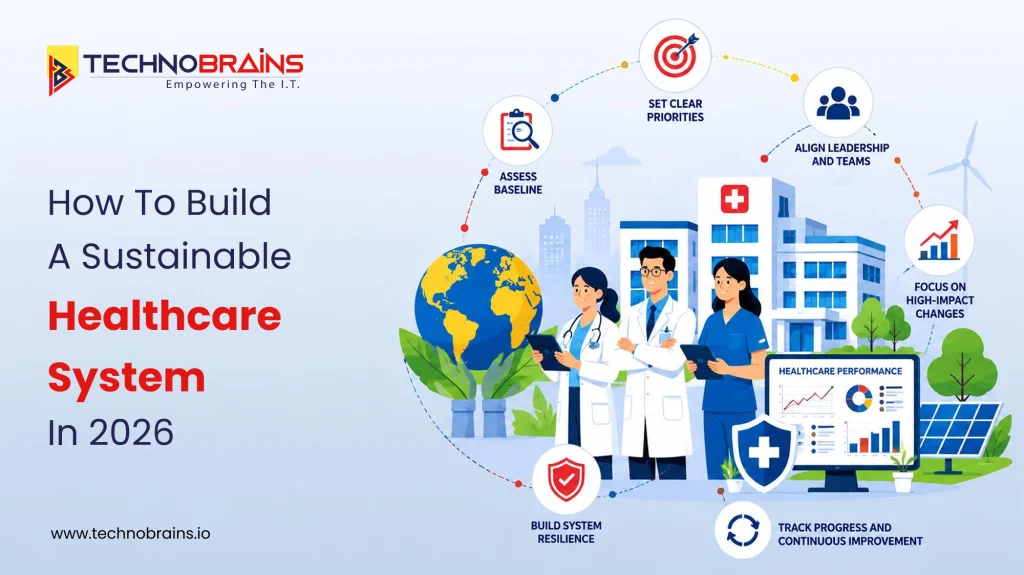
To make a healthcare system work well, it is best for healthcare organizations to take things one step at a time. This usually begins with looking at how things are now, deciding what is most important, making specific changes, and checking how things are going over time. The right sustainable healthcare solutions can also make this process easier.
Assess the Current Baseline
Start by checking how much energy is being used, how much water is being used, how much waste is being made, what is being bought, and what is not working well. This gives healthcare teams an idea of where the biggest problems are.
Set Clear Priorities
Once the problems are clear, the next step is to figure out what needs to be fixed right away and what can be improved later. This makes the plan easier to follow and do.
Align Leadership and Teams
Sustainability is not something that one department can handle by itself. The people in charge of the operations team, the people who buy things, the clinical teams, and the technology teams all need to work towards the same goals.
Focus on High-Impact Changes
Start with changes that can reduce waste, make things more efficient, and make daily work better without hurting patient care. In cases, healthcare sustainability services help organizations focus on the changes that will make the biggest difference first.
Build Resilience into the System
A sustainable healthcare system also needs to be strong when there are problems with supply changes in the climate or a lot of stress. That is why being able to handle problems needs to be part of the plan from the start.
Track Progress and Improve Over Time
Getting better in the run depends on being able to measure progress clearly. With proper performance validation, healthcare organizations can see how they are doing, make their plans better, and keep improving the system over time.
Ready to build a more efficient and future-ready healthcare system?
Connect with TechnoBrains to explore the right sustainable healthcare solutions for your organization.
Get Started Today!
Emerging Trends in Healthcare Transformation
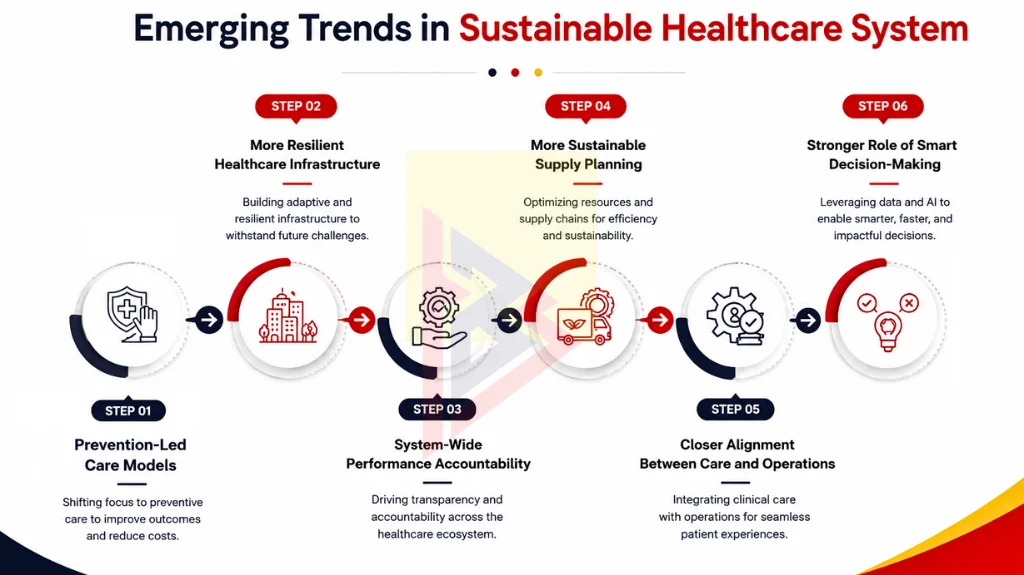
The future of healthcare sustainability is being shaped by a combination of operational innovation, technological advancement, and long-term planning. As healthcare organizations continue their transformation journeys, several trends are emerging that will define healthtech in the years ahead.
Prevention-Led Care Models
Healthcare providers are increasingly shifting toward preventive care strategies that focus on early intervention. By preventing complications before they occur, organizations can improve outcomes while reducing pressure on the healthcare infrastructure.
More Resilient Healthcare Infrastructure
Healthcare facilities are investing in infrastructure designed to withstand environmental disruptions, supply shortages, and operational challenges. Resilience planning is becoming a key component of long-term sustainability strategies.
System-Wide Performance Accountability
Organizations are setting goals, and they think sustainability is a key indicator of how well the whole system is performing. Clear metrics help organizations track progress and drive continuous improvement.
More Sustainable Supply Planning
People are paying attention to how they buy things and get supplies because it affects how much waste they make, how much things cost, and if they can count on getting what they need. These efforts contribute to both sustainability objectives and operational stability.
Closer Alignment Between Care and Operations
Hospitals are connecting the way they provide care, facility operations, workforce planning, and the way they do things to get results in the long run. This helps make the whole system more efficient and coordinated.
Stronger Role of Smart Decision-Making
Artificial Intelligence, predictive analytics, and real-time reporting tools are helping organizations make faster, more informed decisions. These technologies support forecasting, resource optimization, and continuous performance improvement across healthcare operations.
How TechnoBrains Supports Your System Development Journey
Healthcare organizations need to make big changes to build a healthcare system. They have to improve operations, integrate different systems, and use resources more effectively in everyday work.
As a leading healthcare software development company, we help providers with practical solutions for planning, operations, and making healthcare more sustainable. The aim is to make things more efficient, reduce waste, and support the system’s long-term performance.
The key is to start with an idea and build from there. With the approach and sustainable healthcare solutions, organizations can create systems that deliver real value from the start. Contact TechnoBrains to discuss how you can move forward.
Frequently Asked Questions
Sustainable healthcare focuses on delivering quality care while using resources responsibly and reducing environmental impact. The goal is to support both current and future healthcare needs.
A sustainable healthcare strategy for hospitals focuses on reducing waste, improving operations, and aligning teams to support long-term performance and care delivery.
The key components of the system include better resource management, preventive care, resilient infrastructure, and smarter supply chains working together.
The benefits of sustainable healthcare systems include lower costs, improved efficiency, stronger system resilience, and better long-term patient outcomes.