How to Build an Instant Food Delivery App that Works in Minutes
Instant food delivery has moved from being a nice-to-have feature to an everyday expectation. People open a food delivery app because they want their meal quickly, not because they want to browse. In busy cities, speed often matters more than price or variety. For businesses, this shift changes everything. Building an instant food delivery app […]
05 Feb, 2026
Instant food delivery has moved from being a nice-to-have feature to an everyday expectation. People open a food delivery app because they want their meal quickly, not because they want to browse. In busy cities, speed often matters more than price or variety.
For businesses, this shift changes everything. Building an instant food delivery app is not just about listing restaurants and accepting orders. It’s about designing a system that can prepare, assign, and deliver food within minutes without breaking under pressure. This guide walks through what it actually takes to build a food delivery app that can deliver fast and still stay reliable.
What does a Food Delivery App Actually do?
A food delivery platform is designed to fulfill its goal of delivering food to customers with maximum speed. The system displays only those kitchens and restaurants that can prepare and deliver orders without delay.
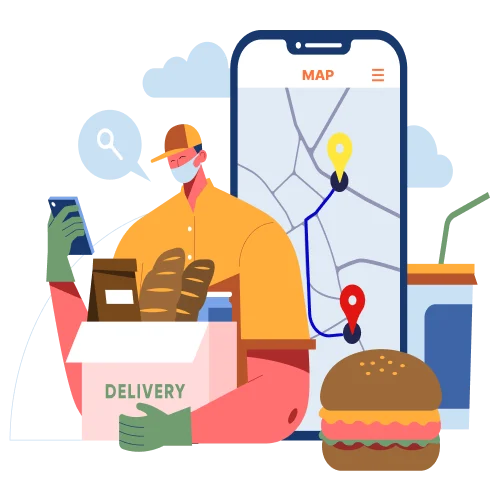
Once an order is received, the app begins by sending it to the restaurant for processing. The system checks for item availability while it identifies a delivery partner and verifies the order details. The system uses synchronized processes to decrease wait times while delivering food from the kitchen directly to the customer.
The rapid performance of the delivery application comes through active collaboration among all involved parties. The system creates a single operational flow that links customers with restaurants and delivery partners.
Ready to launch an instant food delivery app?
Our food delivery app development experts can help you build it the right way. Connect NOW!
Online Food Delivery Market Growth (2026)
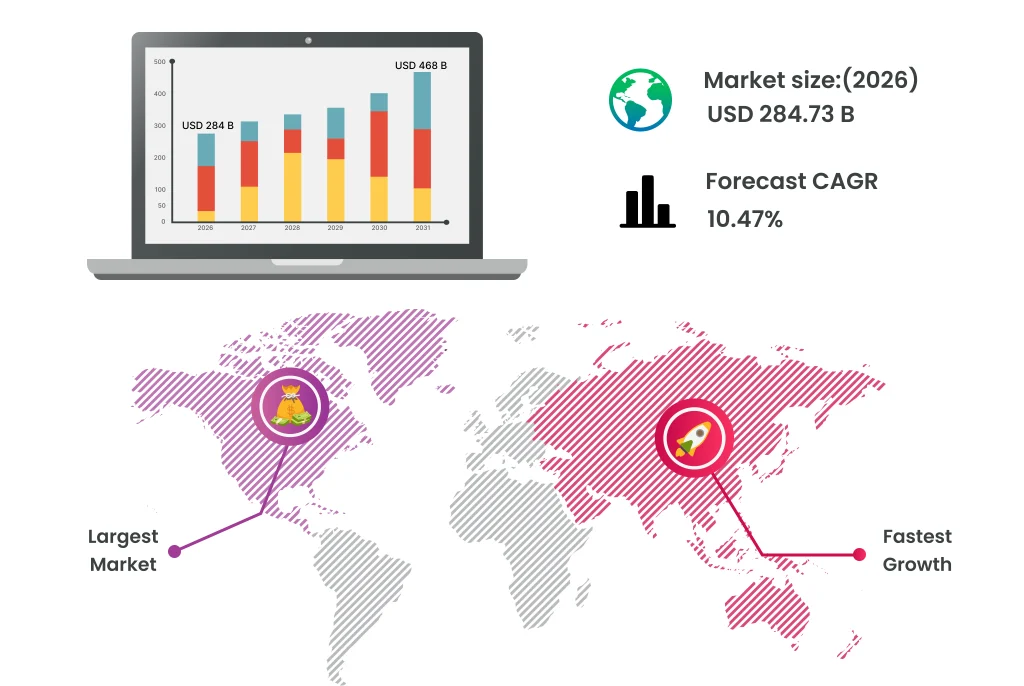
In today’s world, the online food delivery market is projected to maintain robust growth momentum through 2026. The market research from the industry shows that the market will reach a value of $284.73B in 2026 and continue to increase until it reaches $468.51B in 2031, which will result in a compound annual growth rate of 10.47% during the forecast period. The upward trend continues because users now rely more on digital food ordering systems, which provide them with fast meal options that match their active lifestyles.
Mobile applications still dominate the sector, generating most of the orders, while platform-managed delivery services show fast growth because they expand their service areas and improve their ability to handle operations. North America maintains its position as the largest market, while the Asia-Pacific region shows the fastest growth, which evidences strong worldwide adoption patterns. Food delivery platforms use their operational capabilities to achieve competitive advantages through delivery speed, operational efficiency, and real-time user experience in markets that face moderate competition.
How Instant Food Delivery Is Different From Traditional Food Apps
Here’s the real difference between fast delivery platforms and traditional food apps. Instant delivery platforms are built around time, while traditional food apps are built around choice. Instead of offering endless restaurant options, these platforms limit listings to kitchens that can prepare and hand over food immediately.
| Aspect | Instant Food Delivery Apps | Traditional Food Delivery Apps |
|---|---|---|
| Core focus | Built around speed and short delivery times | Built around variety and restaurant choice |
| Restaurant visibility | Only shows kitchens that can prepare food immediately | Shows all listed restaurants regardless of prep time |
| Delivery radius | Small, tightly controlled delivery zones | Large delivery areas |
| Order confirmation | Order is confirmed only when the food and rider are available | Order is accepted first, and delivery is arranged later |
| Handling delays | Delays are minimized through real-time checks | Delays are common and often communicated after ordering |
| System design | Real-time coordination between customer, kitchen, and rider | Sequential flow with waiting stages |
How an Instant Food Delivery App Works?
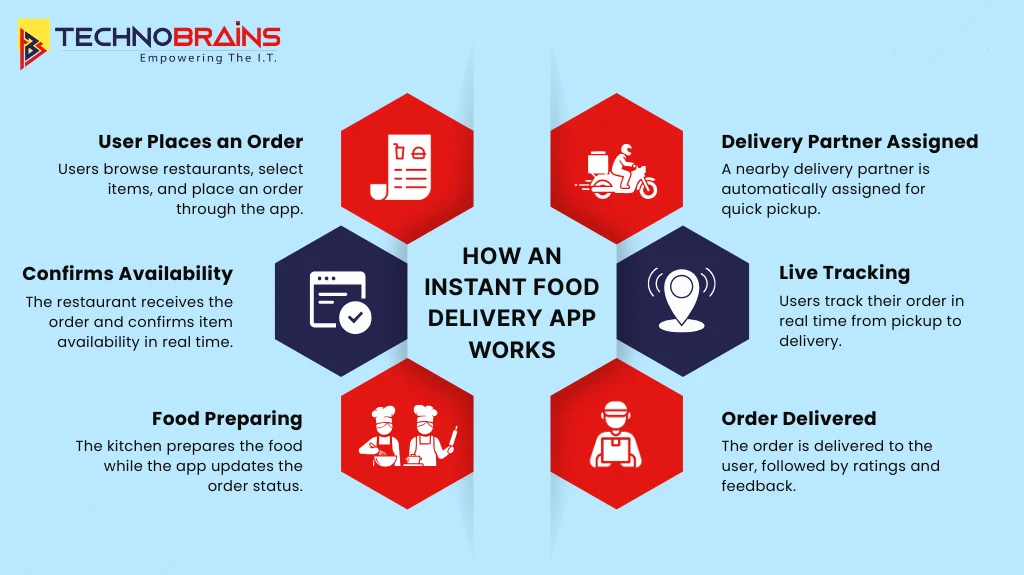
An instant food delivery app is designed so that no part of the order process waits unnecessarily. Unlike traditional food delivery platforms, where tasks happen one after another, instant delivery systems run multiple checks at the same time. The goal is to reduce idle time at every stage, from ordering to pickup to delivery. This tightly coordinated approach is what allows food to reach customers within minutes instead of an hour.
Location and delivery zone detection
To begin, the application determines the user’s current location and reachable delivery area. The system shows only kitchens and restaurants that can prepare meals and meet delivery commitments, preventing options that could cause order delays.

Real-time menu availability
Before customers place their orders, the application checks if the selected menu items are available at the present moment. This measure minimizes last-minute cancellations or substitutions that could otherwise extend delivery times.
Order confirmation
Right after checkout, the system confirms all orders once the customer completes the process. The system checks both food availability and delivery partner readiness at the same time when the customer completes the checkout process.
Delivery partner assignment
The system automatically uses delivery partner proximity together with their current work capacity and estimated delivery time to allocate the closest delivery partner. This method enhances efficiency for both pickup and drop-off operations.
Parallel cooking and dispatch
During meal preparation, cooks can begin preparing meals while delivery partners start their journey to pickup locations. The process enables simultaneous cooking and dispatching, which results in zero waiting time between those two activities.
Live tracking and updates
Throughout each order, the application maintains continuous order and rider tracking until the delivery process ends. The system updates all delivery changes that occur because of traffic or preparation modifications to provide customers with accurate progress updates throughout the entire process.
Food Delivery Business Models That Support Faster Delivery
Speed in food delivery is not only a technology problem. It is largely shaped by the business model behind the app. The way food is sourced, prepared, and handed over to delivery partners directly affects how quickly an order can reach the customer. Some business models are naturally better suited for instant delivery, while others struggle to meet short delivery windows.
Kitchen-owned model
In this cloud kitchen delivery model, the business operates through its existing system, which allows it to control kitchen operations, menu design, and production scheduling. The system functions most effectively in urban environments that experience steady demand and receive a large number of customer orders.
Restaurant partner model
Here, the app works with selected restaurant partners that agree to short preparation times. Not every restaurant qualifies. Only those who can consistently prepare food quickly are included. While this model offers more variety, maintaining speed requires strict service-level agreements and close coordination. Building strong partnerships falls under restaurant app development services.
Cloud kitchen model
Cloud kitchens run their entire business model through delivery services, which enables them to prepare food with complete dedication to efficiency. The delivery system achieves its best performance when restaurants operate their facilities in locations that experience high customer demand.
Hybrid model
Many fast delivery platforms combine their own kitchens with restaurant partners, offering speed and variety. Strong operational tools, supported by an on-demand app that helps manage both sides efficiently.
Features That Make an Instant Food Delivery App Successful
An instant food delivery app works only when its features support speed at every stage. These features are not about adding complexity but about removing friction. Each one plays a role in keeping orders moving quickly from the kitchen to the customer.
Real-time menu management
The system needs real-time food updates that show items as unavailable until customers complete their order. Accurate menus are critical in web development services to prevent delays, refunds, and poor user experience.
Fast, simple checkout
Instant delivery depends on making quick choices. A simple checkout like PayPal integration requires only one tap for payments, uses saved addresses, needs few inputs, eliminates customer drops, and helps customers finish their orders faster.
Live order and delivery tracking
In today’s world, customers expect to track their orders in real-time after making a purchase. The combination of live tracking and AI development services enables on-demand food delivery applications to assign delivery partners from nearby locations while they create optimal delivery routes in real time.
Delivery partner assignment
Choosing the right delivery partner at the right time is critical for successful operations. The system needs to choose riders through three criteria, which are distance, availability, and their expected delivery time, to prevent delivery delays.
Kitchen management dashboard
Kitchens need simple dashboards to manage orders, preparation status, and handoffs efficiently. UI/UX design services ensure these apps are intuitive, helping staff stay aligned and customers stay informed.
Built-in customer support
In today’s rapid delivery systems, problems can still emerge. The system includes built-in support tools that enable rapid resolution of order problems, delivery delays, and product substitutions while maintaining the complete delivery process.
Planning a Quick Food Delivery Platform?
Get a custom-built instant food delivery app designed for speed, reliability, and growth. Connect with Technobrains.
Managing Orders and Inventory Without Delays
In the instant food delivery industry, most delays happen before dispatch because of mismatches between customer orders and available kitchen stock. The cloud kitchen delivery system depends on real-time order management to determine which food items venues can immediately prepare when customers place their orders.
The app must check product availability and reserve selected items when customers complete their order. The system blocks multiple customers from ordering limited-quantity dishes simultaneously, which results in decreased cancellations and enables a steady preparation process from the initial stage.
The kitchen staff needs to receive real-time order updates that are shared with delivery partners and customers at the same time. This coordination helps teams stay on schedule, improves delivery speed, and supports stable app performance while keeping food delivery app costs at a level suitable for sustainable business growth.
Delivery Partner Flow and Route Management
Delivery partners play a central role in how fast food reaches the customer. Even with a well-designed app, delivery speed can suffer if rider movement isn’t planned carefully. That’s why instant food delivery apps focus on making the rider’s job as simple and efficient as possible.
- Delivery partner assignment: The system assigns a nearby delivery partner who can complete the delivery within the promised time
- Timely pickup coordination: Delivery partners arrive at the kitchen when the food is nearly ready. This prevents waiting at the pickup location.
- Real-time navigation: The app provides live navigation that adjusts routes based on traffic, distance, and road conditions.
- Live tracking for customers: Customers and operations teams can track the delivery partner in real time.
- Dynamic handling: If a delivery partner faces an unexpected delay, the system can adjust routes or delivery timing instantly. This ensures minor issues don’t disrupt the overall delivery experience.
Technology Setup For Fast Food Delivery Apps
An instant food delivery app can only move fast if the technology behind it is designed for speed from day one. This doesn’t mean using the most complex systems, but choosing custom software development and the right setup that allows orders, kitchens, and delivery partners to stay in sync at all times. A slow or poorly planned backend can undo even the best front-end experience.
- Real-time backend: The backend system should efficiently process orders, delivery updates, and availability updates in real time to achieve synchronization between all system components.
- Event-based order updates: Each stage of the order lifecycle should trigger immediate updates because customers, kitchens, and delivery partners need access to current status information.
- Streamlined early-stage architecture: Connected and lightweight architecture helps enable fast issue resolution while it decreases system response times. Minimum Viable Product (MVP) development services assist in validating essential functionalities prior to scaling operations.
- Location and map integration: Integrated mapping services provide accurate tracking, which helps to find the best delivery partner and improves navigation performance.
- Scalability with consistent performance: The system must be able to handle increased order volumes without affecting delivery speed or overall performance during peak operational periods.
- Monitoring and performance alerts: Comprehensive monitoring tools can detect potential problems before they affect end users through automated problem identification.
Ready to launch an instant food delivery app?
Let Technobrains help you build it right. Talk to Our Experts.
Cost Considerations for Instant Food Delivery App Development
Building an instant food delivery app is less about a fixed price and more about choosing where to invest. Speed, reliability, and scale all influence the final cost, and cutting corners in the wrong areas often leads to higher expenses later.
Real-time system requirements
Instant food delivery systems require live updates to confirm orders, show menu items, and deliver partner information and tracking status. The system needs backend systems and infrastructure, which require more resources to support its high level of real-time interaction.
Number of user interfaces
The platform requires more development work when it adds additional user roles. The project needs to spend more on design work, development work, and testing work because it includes customer apps and delivery partner apps, kitchen interfaces, and admin dashboards.
Delivery area and location logic
A single-city setup with fixed delivery zones is simpler yet more cost-effective. Development work becomes more challenging when a system needs to support multiple cities and dynamic zones and location-based rules.
Performance and scalability planning
Applications built for low-order volumes have lower initial costs but reduced scalability. The development process needs to begin testing and optimization work for peak-hour traffic and future growth needs, which results in higher development expenses.
Post-launch enhancements
Instant food delivery applications require continuous software updates, performance enhancements, and operational tools to sustain their speed while their user base increases.
Common Challenges in Instant Food Delivery Apps
Even with strong demand, many instant food delivery apps struggle after launch. Most issues don’t come from a lack of users, but from small gaps in execution that grow under real-world pressure. Understanding these challenges early helps avoid costly fixes later.
Managing food availability in real time
A common challenge for restaurants is displaying food options that their kitchen staff cannot prepare at that moment. When restaurants fail to update their food availability information immediately, customers experience order delays and cancellations, which leads to a rapid decline in their trust in the service.
Balancing speed with consistency
Delivering fast food once is simple, but maintaining that speed consistently is harder. During peak times, every small delay in delivery worker access or food preparation time will multiply its impact on multiple customer orders.
Delivery partner timing issues
When delivery partners arrive too early, they wait; when they arrive late, food sits idle. The failure of instant delivery commitments occurs because kitchens and riders fail to coordinate their activities properly.
Handling traffic and location variability
Urban traffic patterns, road blockages, and building access difficulties often affect delivery time. Delivery applications encounter difficulties because their routing systems need to adjust in real time to delivery demands, which change frequently.
Scaling beyond one area
Operational methods that work well in one neighborhood may not perform effectively citywide. The system experiences operational delays when delivery areas expand, but organizations fail to modify their inventory management and operational processes and rider distribution practices.
Customer expectations management
In today’s fast-paced environment, customers expect services to deliver orders instantly. Unclear communication about delivery delays causes customers to perceive minor issues as major problems. The organization requires both clear delivery information and operational visibility to function effectively.
Launching and Scaling an Instant Food Delivery App
Launching a food delivery application might seem simple at first, but the real challenge comes from managing genuine customer orders. Success can be achieved through detailed planning which will be executed in stages while we keep improving our work during real-world testing.
At TechnoBrains, the team uses delivery zones as testing areas for their instant food delivery applications, which they use to track system performance and make system improvements. The method permits teams to gather data about how customers behave, how kitchens function, and how delivery partners operate to improve their delivery system before it goes to full-scale implementation.
With over 15 years of experience and 350 completed projects, TechnoBrains delivers dependable solutions for developing instant food delivery systems that serve more than 200 active clients. Organizations can hire AI developers to create systems that predict delivery times, optimize delivery routes, and manage orders in real time.
Frequently Asked Questions
It delivers food within minutes by connecting users to nearby kitchens and assigning delivery partners instantly.
The timeline depends on the scope and features. For a single city can take a few months, while a larger platform with real-time systems and multiple user apps may take longer.
The cost varies based on features, interfaces, delivery logic, and scalability needs. Fast delivery applications usually cost more than standard food delivery apps.
Yes, but it works best where delivery distances are short and order demand is consistent. In smaller cities, delivery zones and preparation times must be planned carefully to maintain speed.
The answer to this question is affirmative because the system requires distinct applications for kitchens and drivers to achieve better operational management.
Challenges include tracking actual food stock levels, coordinating delivery partners, managing vehicle traffic interruptions, and maintaining speed during busy times.