Get 40 Hours Free Developer Trial
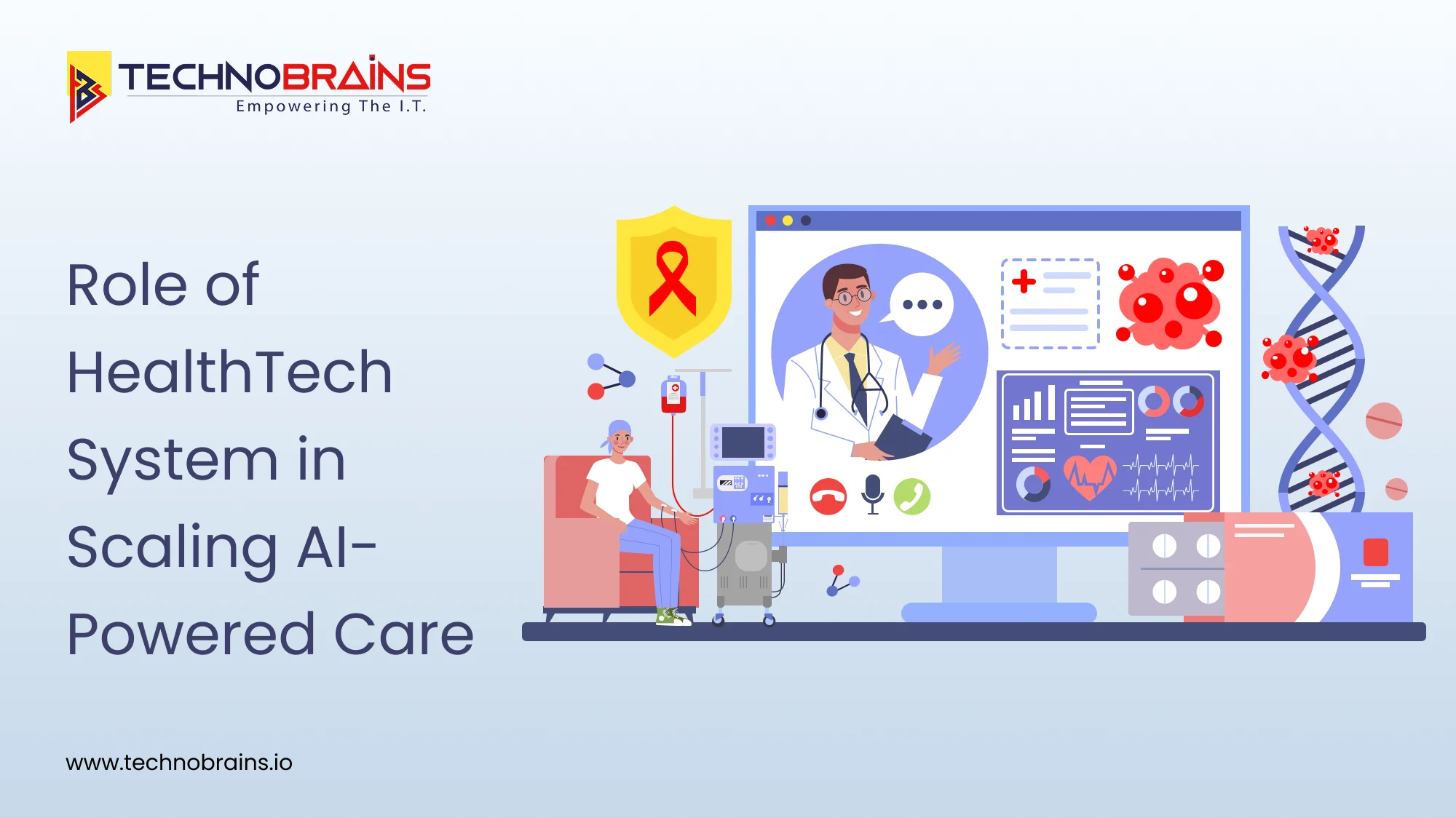
Role of HealthTech System in Scaling AI-Powered Patient Care
By 2026, hospitals and clinics will look dramatically different. The system operates through patient registration on tablets and the use of digital tools by clinicians, together with AI, which handles case triage, risk detection, and decision-making processes. The digital transformation emerged from multiple years of research and development through the creation of healthcare software, which […]
20 Feb, 2026
Role of HealthTech System in Scaling AI-Powered Patient Care
By 2026, hospitals and clinics will look dramatically different. The system operates through patient registration on tablets and the use of digital tools by clinicians, together with AI, which handles case triage, risk detection, and decision-making processes. The digital transformation emerged from multiple years of research and development through the creation of healthcare software, which enables technology to function in actual medical settings.
While the media often highlights AI’s potential in healthcare, its true benefits come from integration into daily clinical routines. AI only delivers actual benefits when it operates on a robust and secure system that has been specifically tailored to meet the requirements of medical personnel and their patients.
This article explores how a custom healthtech system enables AI to operate at scale while demonstrating how suitable application development services assist clinics and hospitals and public health initiatives in delivering superior medical services while minimizing staff exhaustion and adapting to technological advancements.
What is HealthTech System Development?
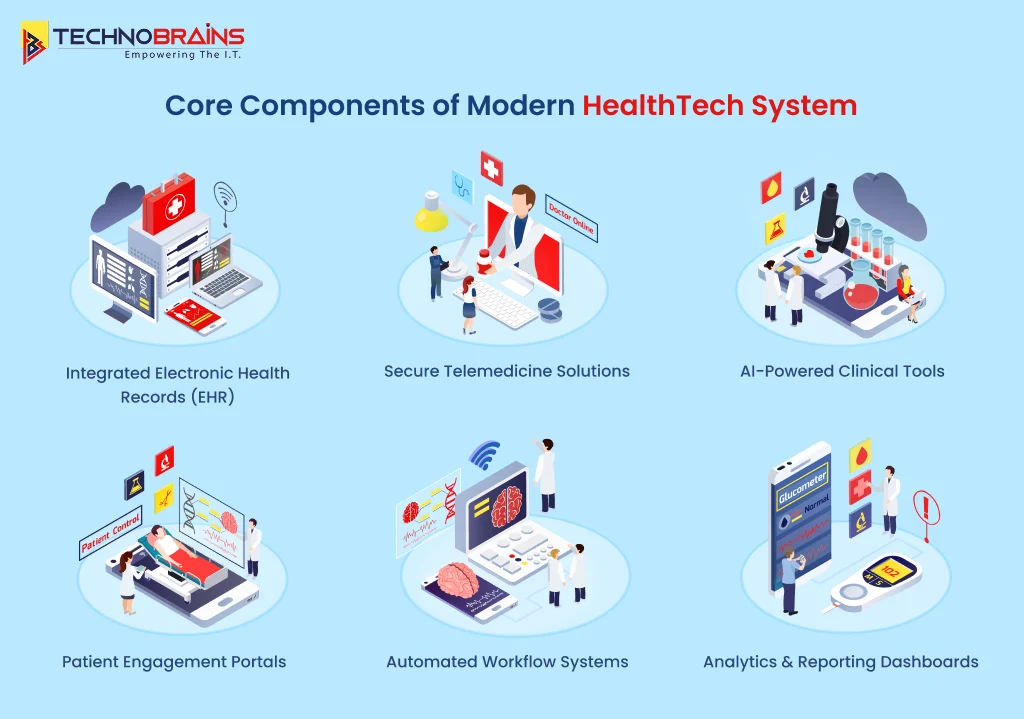
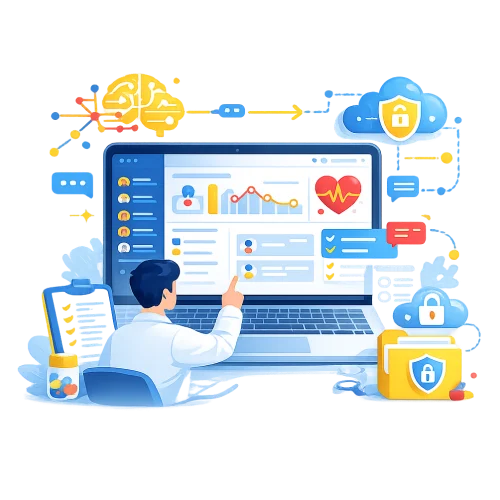
HealthTech system development is the full process of designing, building, integrating, and maintaining digital platforms for healthcare. This includes everything from electronic health records (EHR) and telemedicine platforms to AI-powered diagnostic tools, patient engagement apps, and workflow automation solutions.
It is totally different from general apps because it must meet strict regulations like HIPAA or GDPR, have strong security, work well with other systems, and fit into clinical workflows. Software development companies usually work closely with clinicians, administrators, and regulatory experts to make sure each solution is both practical and compliant.
The Main Types of Healthtech Systems
- EHR and EMR systems: Digital records that centralize patient histories, labs, images, and notes.
- Practice management software: Scheduling, billing, and administrative automation.
- Telemedicine platforms: Secure video visits, remote monitoring, and virtual triage.
- Patient portals: Giving patients easy access to their records, appointments, and communication channels.
- AI-powered clinical tools: From image analysis to risk prediction.
- Workflow automation: Streamlining everything from intake to discharge.
Did you know?
The healthtech market is set to reach $961 billion by 2030. Modernize your care with AI-powered solutions today.
Upgrade Care with AI
The Rise of AI in Healthcare
If you’ve been following the news, you know that AI technology in healthcare has been widely discussed for years. The actual situation will show its operational execution during 2026.
Healthcare uses Artificial Intelligence to handle all aspects of medical imaging and to provide sepsis detection, to forecast patient absenteeism, and to streamline record-keeping processes. The HIMSS survey conducted in 2025 found that more than 70% of US hospitals had implemented at least one AI technology for use in their medical operations.
In most cases, AI technology currently restricts its benefits to particular small applications. The initial AI systems functioned as independent applications, which performed well during pilot tests yet proved difficult to implement across larger environments. The development of customized healthtech system solutions originates from medical software companies. They create the essential digital infrastructure that connects artificial intelligence systems to complete operational processes, data flow, and security procedures, thus creating practical advantages.
Why AI Alone Cannot Scale Healthcare Delivery?
It’s important to remember that AI is not a cure-all. While it can analyze data quickly and identify patterns people might miss, it cannot handle the complex process of care delivery on its own.
The Limits of Standalone AI Tools
- Siloed data: AI tools need access to comprehensive, up-to-date patient information. Standalone apps often rely on partial or outdated data, which limits their effectiveness.
- Disrupted workflows: If clinicians have to leave their EHR or open a separate app to use an AI tool, adoption drops.
- Compliance headaches: Regulatory requirements vary by region and use case. Without integrated compliance, scaling beyond a pilot is risky.
- User fatigue: Too many logins, alerts, and separate tools can cause digital burnout rather than improve efficiency.
The Need for Integrated Platforms
The main takeaway is that AI only delivers on its promise when it is built into the platforms clinicians already use. This requires strong expertise in digital health software development with a focus on integration, security, and usability.

The Challenges of Scaling AI in Healthcare
Despite widespread interest, most AI in healthcare deployments remains stuck at the pilot stage. Here’s why:
Lack of Integration
Many pilot programs operate as standalone “point solutions” that do not establish ties with the essential electronic health record systems or standard clinical operations. The KLAS Research study discovered that 65% of healthcare workers reported integration issues as their main problem with digital health technologies.
Weak Software Foundations
The outdated systems and poorly designed systems fail to deliver the necessary data processing, continuous operation, and secure environment that modern AI systems demand. The Gartner reports show that organizations with legacy systems experience IT support costs that exceed those of organizations using cloud-based modular systems by 30%.
Data Fragmentation
AI relies on clean, comprehensive data for effective performance. However, hospitals maintain patient records across different systems that use various formats. This not only reduces AI accuracy but also erodes trust in its recommendations. McKinsey estimates that 70% of failed healthcare AI projects are due to poor data integration.
Compliance and Security Risks
Healthcare remains the top target for cybercriminals worldwide. Any AI deployment that can’t guarantee privacy, role-based access, and auditability is a non-starter, especially at scale.
Workflow Misalignment
When software fails to align smoothly with clinicians’ daily routines, it becomes an added burden. The simplest way to stop users from adopting a system is through poor software design, which creates extra operational tasks.
Key Capabilities of Leading HealthTech Development Companies
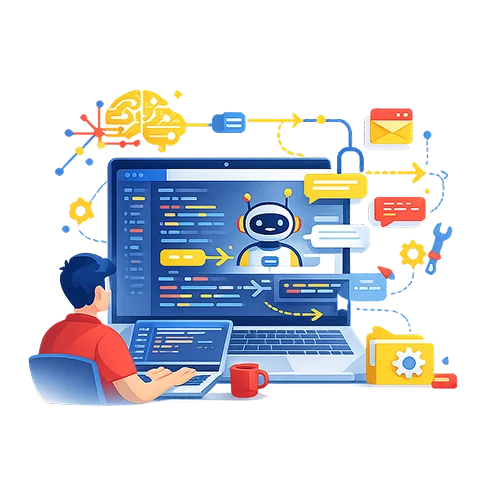
Leading healthtech companies use artificial intelligence to build secure and scalable platforms that their users can access easily. Digital health software development goes beyond coding to establish the system base, which creates dependable and compliant medical solutions that help doctors and enhance patient treatment.
- System Integration: This process connects AI software with electronic health record systems, scheduling solutions, billing platforms, and reporting tools.
- Healthcare Workflow Automation: This approach uses AI technology to streamline essential operations, which include patient intake processes, documentation tasks, and patient discharge activities.
- Data Consistency and Interoperability: This setup establishes unified data pipelines that enable artificial intelligence to access real-time patient data from trustworthy sources.
- Platform Scalability: This framework develops modular solutions that expand according to your requirements, from single clinic operations to multinational healthcare organization needs.
- Security and Compliance: This design incorporates all HIPAA and GDPR requirements through its design process instead of treating them as secondary concerns.
- User-Centered Design: This solution provides clinician-friendly interfaces together with support services that enable users to maintain their engagement with the system.
How AI Delivers Real Impact Across Healthcare?
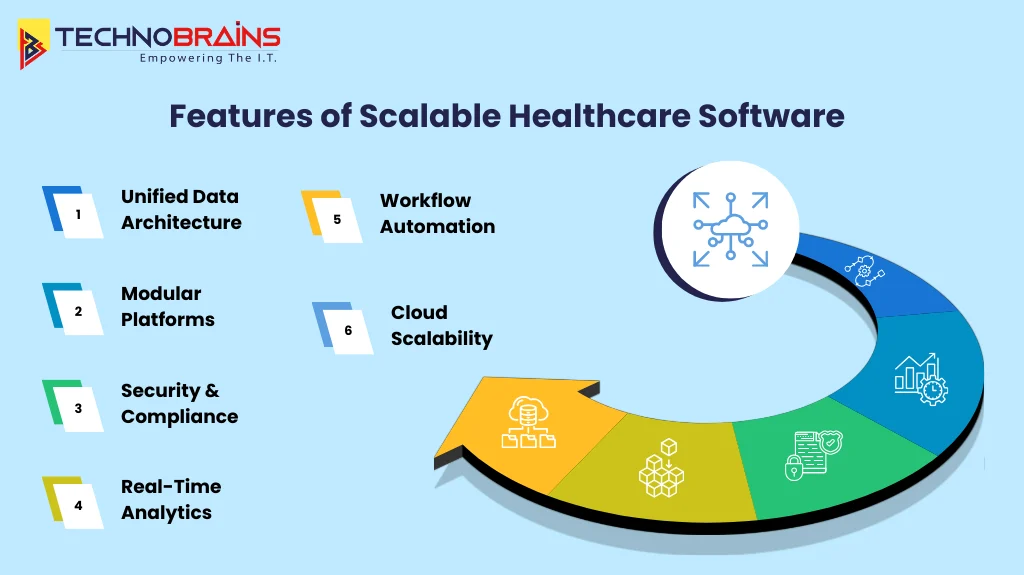
The following software features distinguish scalable AI-powered care from unsuccessful pilot projects.
Unified Data Architecture
Modern healthtech systems enable users to obtain laboratory, imaging, pharmacy, and wearable device data throughout the day. The AI system achieves situationally relevant insights through its ability to analyze the entire data set.
Modular, Customizable Platforms
Healthcare organizations operate with distinct requirements. The leading healthtech software developers create systems that hospitals can modify according to their specific operational, regulatory, and technological needs.
Embedded Security and Compliance
By 2026, security breaches are expected to increase while their associated costs will rise accordingly. The top healthcare IT solution providers implement encryption and real-time auditing, and role-based access control as essential elements of their security systems.
Real-Time Analytics and Reporting
In today’s healthcare environment, clinicians and administrators can use on-demand dashboards to improve their efficiency in managing both healthcare quality and resource distribution.
Workflow Automation
Automation of tasks such as documentation, reminders, and triage reduces clinician burnout and operational costs. AI-supported healthcare workflow automation enables clinicians to allocate more time to patient care rather than administrative tasks.
Cloud-Native Scalability
Using cloud and hybrid architectures enables organizations to expand their user base, operational sites, and critical system components while maintaining flexible scalability that meets their healthcare needs without jeopardizing system performance or safety.
In 2026, success depends less on algorithms and more on healthtech system development that integrates AI into everyday care workflows.
Talk to Our HealthTech Experts!
Real-World Examples of Smart HealtethTech System
Healthtech system helping organizations streamline workflows, improve care, and make smarter, data-driven decisions. These examples show how AI and custom solutions deliver real impact.
Primary Care Clinics – Mayo Clinic
AI automates patient intake processes to gather symptoms and create follow-up alerts. The system combines with electronic health record systems to decrease patient check-in duration by 38%. The digital health application enables ICU monitoring and automated radiology reading and predictive staffing analysis, which enables clinics to handle extensive datasets and maintain compliance requirements.
Enterprise Staff Scheduling – TechnoBrains
TechnoBrains developed staff scheduling software that uses artificial intelligence to automate shift planning and staff assignment across multiple healthcare facilities. The system automatically creates employee work schedules while distributing workforce resources and showing current status information to all healthcare facilities. The system demonstrates operational advantages from custom healthtech development through its combination of artificial intelligence and workflow automation, which minimizes errors and enhances time efficiency.
How to Choose the Right HealthTech System Development Company?
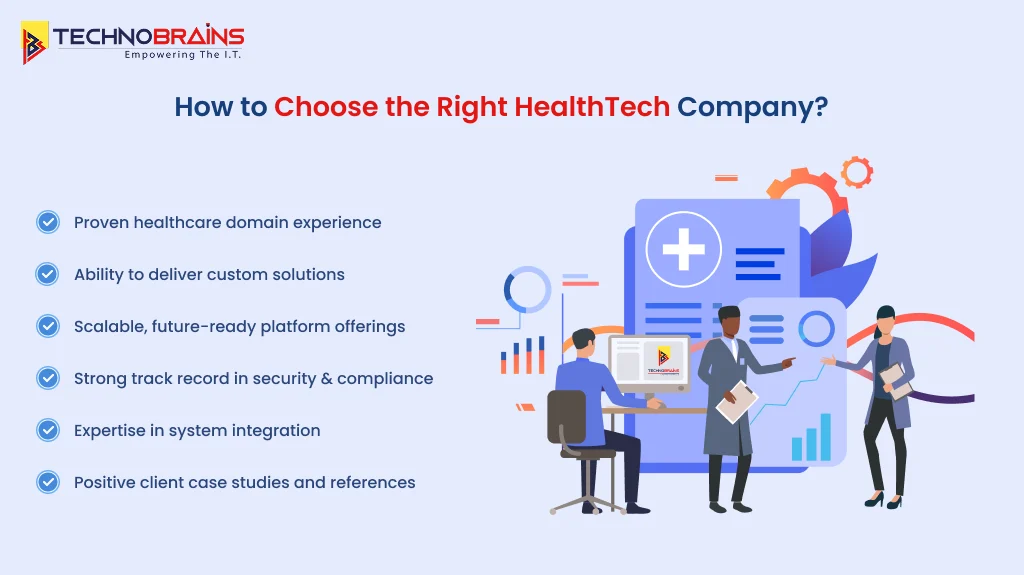
Choosing the right technology partner can create a long-lasting impact on an organisation. Key considerations include the following:
Domain Expertise
Select a healthtech system development company that operates in the United States and multiple international markets because its team understands clinical workflows, security protocols, and compliance standards.
Customization
In many cases, organizations must change their workflows to fit off-the-shelf solutions. The development of a custom healthtech system delivers solutions that match the particular requirements of operational functions.
Scalability and Support
Effective technology partners who succeed in their roles provide strong post-launch assistance while building systems that develop with their clients’ increasing business needs.
Security and Compliance Leadership
A trusted healthcare IT solutions provider should demonstrate successful experience with HIPAA, GDPR, and other healthcare industry requirements.
Integration Capability
Strong technology partners must have the ability to connect new systems with their current electronic health record systems, billing systems, and analytical tools.
Client References and Case Studies
Always request evidence of successful implementations in comparable healthcare environments.
Step-by-Step HealthTech System Development Process
Healthtech software development follows a structured, agile process to ensure security, compliance, and scalability. Each step is designed to support real-world clinical workflows while enabling AI-powered care to grow beyond pilot programs.
Requirements Analysis and Discovery
To meet real healthcare needs, the solution begins by analyzing clinical workflows and business goals together with regulatory requirements and AI application scenarios.
Feasibility and Compliance Assessment
At this stage, the team evaluates the project’s technical feasibility. This includes assessing data readiness, evaluating security risks, and checking compliance with HIPAA and GDPR throughout the project’s lifecycle.
Planning and Architecture Design
In this stage, the definition process establishes system architecture, data flow, integration points, and growth capacity requirements, which enable AI development, system interoperability, and system expansion.
Solution Design and UX Development
During this phase, the team creates user interfaces designed for clinicians, ensuring ease of use by aligning with their existing workflows. Moreover, the design follows established UI/UX principles, which reduces cognitive strain and encourages user acceptance.
Software Development and Integration
Here, the team builds the platform, which includes AI model connections, EHR system links, and third-party system integration and data-sharing capabilities.
Testing, Validation, and Deployment
Before deployment in real healthcare environments, the team performs complete system testing to verify system performance, security, and regulatory compliance before actual operation in healthcare environments.
Ongoing Support, Scaling, and Optimization
After setup is complete, the team provides complete service by monitoring system performance and delivering software updates and system enhancements. The software can expand its capabilities to support various healthcare environments while meeting changing requirements.
Conclusion
AI in healthcare has evolved into a well-established practice. The real value of this technology emerges when it’s woven into secure healthcare software development, designed for scalability and the daily needs of both healthcare workers and patients.
Robust digital infrastructure allows digital health software to evolve AI from isolated testing programs into reliable organizational systems, boosting operational efficiency and enhancing patient care.
TechnoBrains assists healthcare organizations in expanding their AI-driven care capabilities, tailoring solutions to their unique needs.
FAQ
What is AI in healthcare, and how is it used?
AI in healthcare helps hospitals manage administrative operations while backing medical choices, performing patient assessments, processing medical records, and conducting research activities
Why does AI in healthcare struggle to scale?
AI in healthcare often faces expansion challenges because existing systems lack effective integration, data storage operates in separate entities, and software development bases remain insufficient to support operational requirements.
How does a healthtech system support AI adoption?
Healthtech technology enables clinical operations to operate securely through security solutions that maintain compliance requirements and systems that use HL7 for software integration.
Can AI improve healthcare without custom software?
AI tools in healthcare delivery require specific modifications because their current capabilities provide only limited advantages. Healthcare organizations need custom software development to create lasting solutions because AI systems must meet operational needs and compliance standards.
Is AI in healthcare truly safe and compliant?
The safety of AI within healthcare depends on system design and governance. Digital health software development includes security features, auditability functions, and compliance requirements, which enable healthcare organizations to implement AI technology responsibly.
What key areas should healthcare organizations prioritize when adopting AI?
Healthcare organizations should establish their main focus areas as system integration and workflow alignment, data quality, and scalability. The development of a healthtech system needs funding because it establishes benchmark outcomes for AI implementation in healthcare services.
How is AI in healthcare expected to evolve by 2026?
By 2026, AI in healthcare will become an integral part of essential healthcare systems instead of operating as independent systems. The transformation process will be driven primarily by digital health software development.