Get 40 Hours Free Developer Trial
Guide to Telemedicine App Development for Modern Healthcare
Are you trying to choose the right approach for telemedicine app development? The initial phase requires a complete understanding of essential functions, necessary system linkages, required interface connections, and mandatory regulatory standards that organizations must achieve to achieve growth and financial success. This process enables you to obtain the necessary information, which will help you […]
23 Feb, 2026
Guide to Telemedicine App Development for Modern Healthcare
Are you trying to choose the right approach for telemedicine app development? The initial phase requires a complete understanding of essential functions, necessary system linkages, required interface connections, and mandatory regulatory standards that organizations must achieve to achieve growth and financial success. This process enables you to obtain the necessary information, which will help you choose between hiring a telemedicine application development company or conducting your own internal development work.
After COVID, remote medical services became an ongoing demand, which led to increased telemedicine application development needs among startups, hospitals, clinics, and speciality practices. As per “Grand View Research” reports, the global telemedicine market will reach USD 169.45 billion by 2030, which shows that virtual care has become a standard practice in contemporary medical treatment.
Today, healthcare providers are adopting telemedicine application development to create better consultation solutions, which will improve patient experience while supporting their operations outside of physical medical facilities. Telemedicine establishes the future of digital medical services because it incorporates standard technologies such as AI triage systems, wearable device connectivity, voice command features, and EHR system compatibility.
What is a Telemedicine App?
A telemedicine app enables patients to connect with healthcare professionals through remote access for their medical consultations, diagnostic assessments, and follow-up appointments. The development of telemedicine applications creates secure platforms that enable remote medical services and patient monitoring, and real-time communication. The system enables healthcare providers to deliver services to patients in urban and rural areas while building better patient relationships through improved access to healthcare services.
Custom vs. Ready-Made Telemedicine App Development: Which Option is Right for You?
Deciding between building a custom telemedicine app or using an existing solution depends on your business requirements because of your need for future expansion, which directly connects to enterprise software development for healthcare systems.
Ready-Made Telemedicine Apps
A ready-made telemedicine app offers a cost-effective way to start operations quickly for clinics and startups that need basic telemedicine services. The solution works for clinics and startup businesses, yet it restricts their ability to customize and grow their platform, along with expanding user requirements.
Custom Telemedicine App Development
Building custom telemedicine applications will match both your operational processes and regulatory requirements. The solution requires greater resources and time commitment, yet provides you with operational authority with enhanced system growth capabilities and advanced system links, which allow your enterprise to develop its operations.
Benefits of Telemedicine App Development
Telemedicine applications allow healthcare professionals to deliver treatment services to patients beyond physical facilities. The system enables advanced functions that include AI medical coding, which contributes to the development of more intelligent and efficient digital healthcare systems.
Increased Accessibility
Telemedicine applications enable patients who live in remote locations or underserved regions to reach medical specialists without needing to travel.
Improved Patient Engagement
The combination of online booking systems, secure communication channels, reminder systems, and simple record access enables patients to understand their medical condition and participate in their treatment.
Cost Savings
Through telemedicine, patients can avoid unnecessary appointments, while healthcare workers can automatically handle basic operations, resulting in reduced practice expenses and improved time management.

Enhanced Efficiency
Healthcare teams can streamline their daily operations through system features that provide built-in tools for scheduling, billing, and documentation tasks.
Better Health Outcomes
The combination of remote healthcare consultations with ongoing patient monitoring enables medical professionals to identify problems at an early stage, which allows for prompt and effective patient treatment.
Recent Telemedicine Momentum Update
India’s RMLIMS Lucknow launched a telemedicine pilot where patients can upload reports and consult doctors via video, reflecting rapid adoption even in government hospitals. Meanwhile, Hong Kong’s 2025 Policy announced major investment in telehealth infrastructure, AI-powered screening, and cross-border digital health records, signalling a strong global government-led acceleration of virtual care.
Top Use Cases of Telemedicine Apps
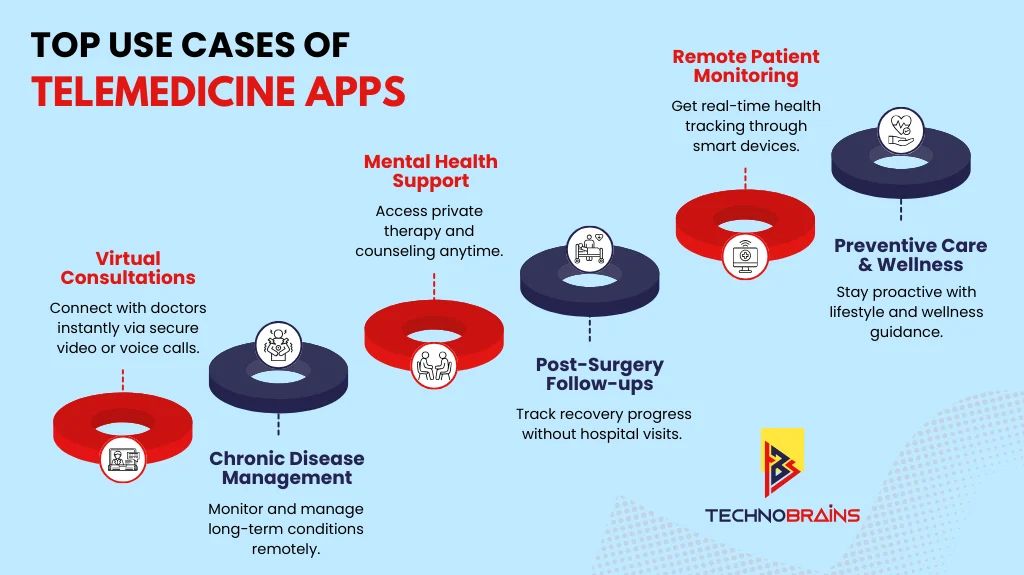
Telemedicine apps provide secure video and voice, which eliminates the need for patients to travel and wait for their appointments. Here are some of the real-time use cases of the telemedicine applications:
Virtual Consultations
The app enables patients to instantly connect with doctors via secure video or voice calls, removing travel, long queues, and unnecessary wait times. This remains the most widely adopted use case across leading healthcare software development companies.
- Real-time video/audio consultations
- Ideal for routine care & follow-ups
- Faster medical advice in minutes
Chronic Disease Management
Continuous remote monitoring helps doctors manage long-term conditions like diabetes, hypertension, and cardiac health without frequent hospital visits. Telemedicine apps ensure treatment stays aligned and proactive.
- Regular check-ins & vitals tracking
- Personalized treatment optimization
- Prevents complications through early action
Mental Health Support
Digital therapy through secure calls or chat removes stigma barriers and increases accessibility for individuals who avoid in-person consultations. It expands mental healthcare reach globally.
- Anonymous, private therapy access
- Psychological support anytime
- Higher adoption among the youth & working class
Post-Surgery Follow-ups
Patients share progress and recovery updates virtually, reducing the need for multiple hospital trips after surgical procedures. Doctors can intervene faster when required.
- Track healing status remotely
- Immediate guidance & adjustments
- Less physical stress post-surgery
Remote Patient Monitoring (RPM)
IoT devices and wearables continuously push real-time vitals into the telemedicine system, enabling early detection and better clinical decision-making.
- Continuous vitals capture
- Automated alerts for anomalies
- Ideal for chronic & high-risk patients
Preventive Care & Wellness
Telemedicine apps also support lifestyle correction, preventive health planning, and habit tracking, reducing long-term healthcare burden.
- Diet, fitness & routine coaching
- Early detection through self-tracking
- Strengthens patient self-care behavior
Essential APIs for Building Telemedicine Apps
The right APIs help reduce development cost, speed up deployment, and enable secure telehealth features. Also, these APIs enable smooth data exchange together with video consultations and patient monitoring, and secure healthcare operations.
- Health Gorilla API – This API delivers secure access to EHR records and lab reports together with patient information through FHIR standards, which enable safe data exchange and clinical workflows.
- DrChrono API – This API enables EHR-based telemedicine applications to function on iPhone and iPad, which makes it suitable for healthcare platforms that prioritize mobile-first access.
- WebRTC API – This technology provides secure real-time video and audio consultations through its encrypted communication system, which doctors and patients use to consult each other.
- Validic API – This platform enables remote patient monitoring while it also combines wearable health data for continuous health monitoring and customized treatment.
- Symptomate API – This tool provides an AI-based symptom checker that assists users in determining their medical conditions and makes triage processes more effective.
- TrueVault API – This service provides HIPAA-compliant storage, which enables users to safely manage and protect patient healthcare information.
- HealthTap API – This platform provides access to verified doctor FAQs together with patient engagement tools, analytics, and an intelligent doctor-patient matching system.
What are the Different Monetization Models of Telemedicine Applications?
Telemedicine platforms utilize various monetization methods to create continuous income streams, which enable their business expansion through the provision of digital wellness programs.
| Model | Description |
|---|---|
| Pay-Per-Visit | Patients pay per consultation, similar to traditional appointments. Simple to launch, and revenue depends on usage frequency. |
| Subscription Plans | Users pay monthly/yearly for unlimited or discounted care. Helps generate predictable recurring revenue and higher retention. |
| Freemium Model | Basic access remains free, while premium features and specialized services require paid upgrades. Great for fast user growth and upsell potential. |
| Commission-Based | The platform earns a percentage on every consultation completed by doctors. Revenue increases as more providers onboard and usage grows. |
| Insurance Partnerships | Insurance covers consultations directly inside the app. Boosts affordability and trust and drives high-volume adoption. |
| Product/Pharmacy Sales | Sell medicines, supplements, or devices inside the platform or via partners. Enables additional revenue linked to treatment decisions. |
How We Built a Telemedicine App
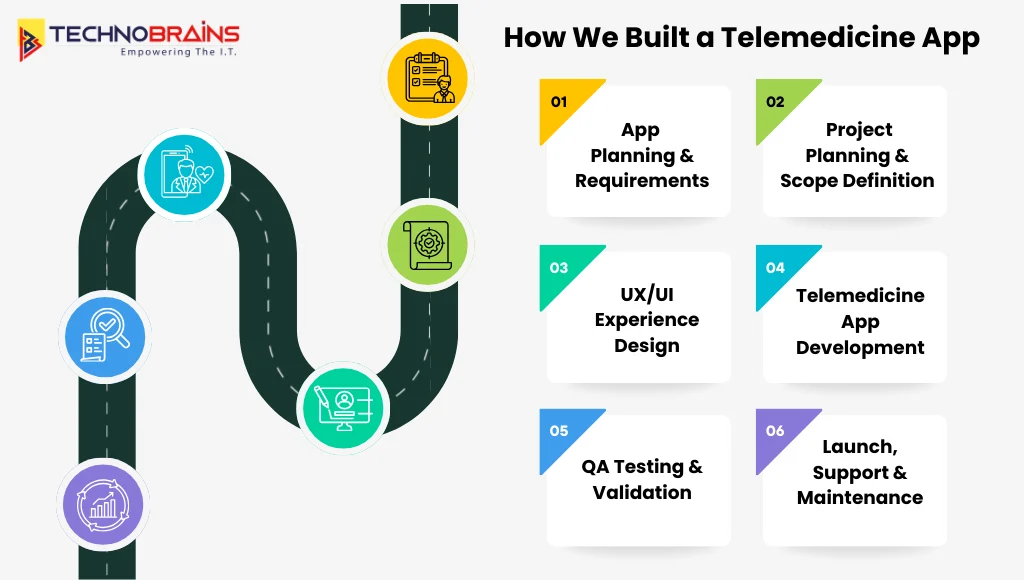
We follow a structured and systematic approach to develop telemedicine apps that are user-friendly, compliant, and scalable while maintaining effective communication between doctors and patients.
Telehealth App Planning & Requirements
We start by understanding your goals, market needs, compliance requirements, and any legacy system modernization needed. This helps define the right features, workflows, and integrations.
Project Planning & Scope Definition
Our project team defines the scope along with the timeline, budget, and key milestones. This development structure establishes order for the entire project while it guarantees that all team members maintain their original understanding.
UX/UI Experience Design
Our design team uses professional UI/UX platforms to create user-friendly application designs that enable patients and doctors to navigate the app without experiencing any difficulties.
Telemedicine App Development
Our developers build a secure system through their development of frontend and backend components, which include video consultations, chat, prescription, and payment features like PayPal, to establish a platform that functions reliably while handling increasing user demand.
QA Testing & Validation
We thoroughly test the app for performance, security, and compliance to make sure it works smoothly and safely in real healthcare environments.
Launch, Support & Continuous Enhancement
After launch, we monitor performance, fix issues, and improve features over time, ensuring the telemedicine app stays secure, stable, and up to date.
Must-Have Features in a Modern Telehealth Platform
A modern telehealth platform must ensure secure operations that enable complete digital health services extending beyond basic video conferencing to deliver comprehensive virtual medical treatment.
Secure User Authentication
Patients and doctors need to establish their identity through secure login with three different authentication methods. Data protection requires organizations to meet both HIPAA and GDPR standards.
Video Consultations & Real-Time Chat
A telehealth system provides remote medical support through its high-definition video calling system and its immediate messaging feature. The system enables users to share files that contain reports and scans to improve diagnostic precision.
Appointment Scheduling & Reminders
This system provides users with simple options to book appointments, and they can easily change their schedule or cancel their appointments. The system sends automatic alerts to users, which leads to decreased rates of appointment no-shows.
E-Prescriptions & Pharmacy Integration
Healthcare providers can provide patients with digital prescriptions, which they can use to order medications through the application by connecting with pharmacy systems.
Payment Gateways & Insurance Support
This platform provides complete patient and provider access through the secure online payment system and insurance processing capabilities.
Future Trends in Telemedicine App Development You Should Know
In the coming years, AI-powered automation, real-time health data, and advanced diagnostic systems will drive telemedicine progress. Healthcare providers will use specialized AI consulting services to develop advanced systems that enhance their ability to assess patients and make clinical choices. Continuous patient monitoring and remote medical treatment will become possible through IoT and wearables, which will create a unified digital healthcare system.
The development of privacy-first systems will establish a new standard that blockchain technology will use to protect medical records while enabling safe data transfer between different systems. The combination of AR/VR technology and 5G connectivity will establish telemedicine as the main method for delivering healthcare services in the modern world through its support of remote procedures and training systems.
Conclusion
Telemedicine apps are transforming modern healthcare by providing faster consultation services and enabling healthcare professionals to serve patients from remote locations while streamlining the process of monitoring patients from their homes. The current system transformation enables medical professionals to achieve superior treatment results through enhanced patient care continuity and the development of treatment systems that match the requirements of modern patients who use digital services.
TechnoBrains, a leading custom healthcare software development company, builds secure and compliant telemedicine solutions that deliver optimal performance. Our organization creates effective digital health solutions that meet the requirements of temporary patients, which range from remote patient monitoring to chronic disease management, virtual triage, and expert system connection. Contact us today to discuss how we can help make your telemedicine product vision a reality.
FAQ
How can telemedicine apps generate revenue?
The revenue streams of telemedicine apps come from various sources, which include pay-per-consultation fees, subscription service plans, provider onboarding charges, insurance payments, white-label licensing, referral commission, and remote patient monitoring services.
Can telemedicine apps operate across different states and countries?
Yes, it can deliver services to global markets when they meet all standards for regional licensing and regulatory requirements, together with data protection laws and safe international data transfer protocols.
What are the main compliance standards for telemedicine applications in the United States?
Telemedicine apps need to comply with HIPAA, HITECH, DEA, and FDA regulations, which require them to protect ePHI.
How secure is a telemedicine application?
The telemedicine applications use end-to-end encryption, multi-factor authentication, role-based access, secure APIs, protected cloud storage, and continuous monitoring to safeguard PHI information.
Can telemedicine apps integrate with EHR systems and hospital networks?
Yes, these applications provide integration capabilities with EHR systems through their compatibility with Epic, Cerner, and athenahealth EHR platforms, which use FHIR and HL7 to enable data synchronization.
What is the cost of developing a telemedicine app?
The overall expenses of a project depend on several factors, which include its feature set, legal compliance requirements, EHR system integration, custom design, and security features.