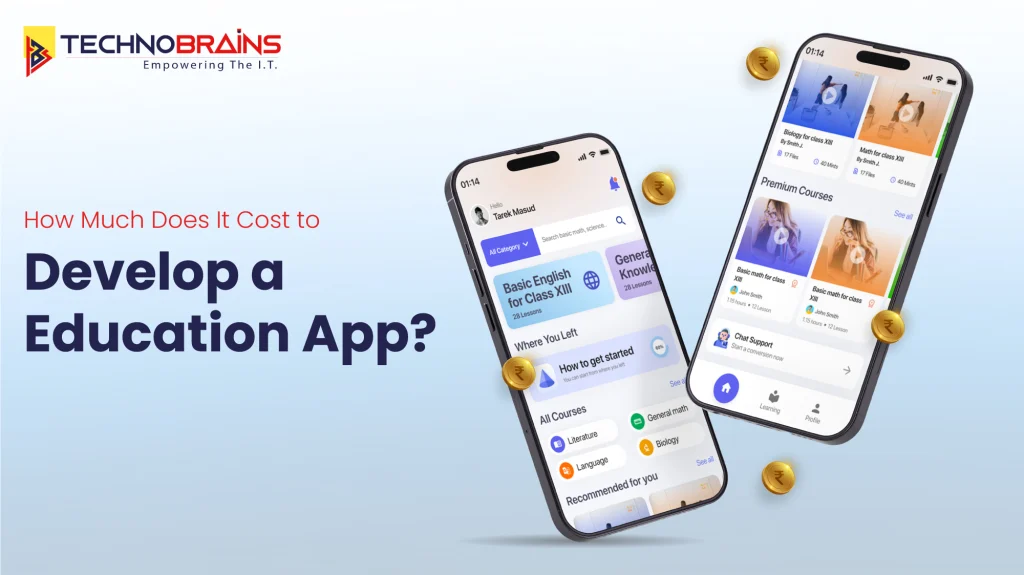
Educational applications are a necessity today, with the modernization of education. The demand for education apps is on the rise. Not only does it allow learners to have personalized learning experiences, but it also meets their tendency toward interactive engagement in knowledge acquisition.
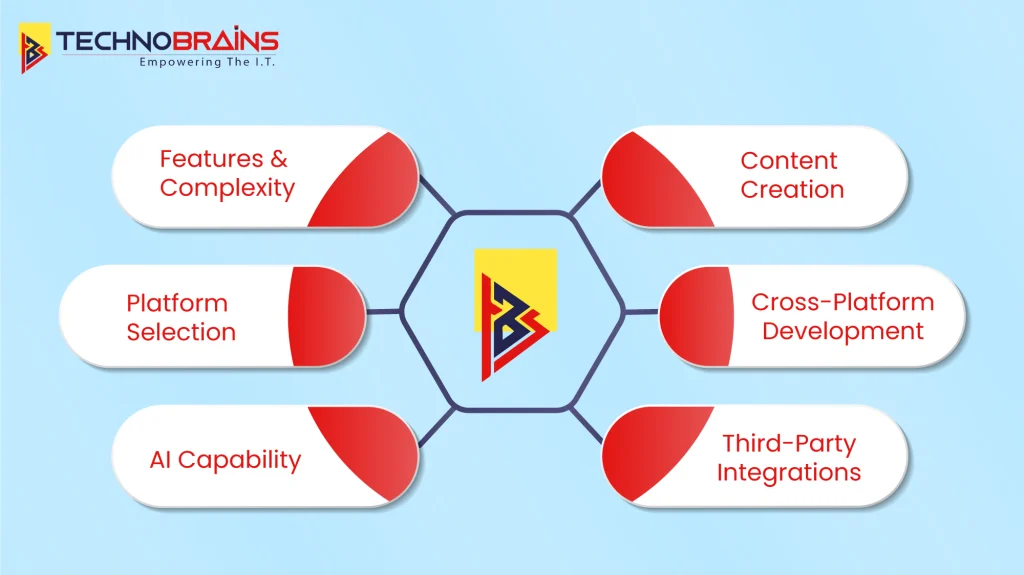
As institutions and businesses seek to develop or upgrade their education platforms, it is essential to understand the factors that shape the development process. There are several factors that influence the cost of building an education app.
Features and Complexity
The features you choose for your education app depend on significant differences in functionality, user experience, and complexity. Some features reported to be in mainstream education apps include:
- User Profiles: Enables learners and educators to create accounts with unique credentials.
- Progress Tracking: Tracks user performance and provides feedback.
- Discussion Forums: Stimulate interaction and cooperation among users.
This implies the direct impact on education app development costs. Identifying the target audience’s needs will therefore be crucial in informing the selection and development of these features.
Platform Selection
The platform for your education app is critical, as it affects your app’s reach and performance. There are two major platforms: iOS and Android.
iOS:
- High user activity and spending levels.
- Stricter processes of application approval.
- Ideal to reach out to a particular user base in the market, especially for educational sectors.
Android:
- Global reach is wider due to the greater number of users.
- More flexibility in distributing applications through various channels.
- Often preferred in the development of applications where development should be done to support a wide range of device specifications.
In addition, an enterprise can create a web application accessible via a web browser. With this, the enterprise will gain greater flexibility, allowing users to access the internet on any device. Everything depends upon your target audience and the devices they use.
AI Capability
Integrating AI into your education app can enhance it. Features of such apps with the power of AI may include:
- Personalized Learning Paths: Leverage algorithms may be used to tailor content and courses to perform for each type of user and their preference.
- Chatbots assist users in real time, thereby increasing engagement and satisfaction.
- Predictive Analytics: Analysis of data about learners to predict learning outcomes or recommend accordingly.
Such features can deliver significant value but will increase the overall complexity of the application. This also contributes to the cost of developing educational apps. The decision on the implementation of AI should, in turn, comply with the general goals of your educational platform.
Content Creation
The bottom line of making an education app successful is its content. The creation of content includes the following:
- Curriculum Development: We will develop creative, relevant educational materials tailored to your audience.
- Incorporation of Multimedia: It includes videos, infographics, and animations to suit different learning styles.
- Regular Updates: Refreshing new and relevant content by updating the materials to show present trends and information.
In essence, there should be continued investment in high-quality content to sustain user engagement and satisfaction. This investment will also further impact your app’s overall user retention and reputation in the educational space.
Cross-Platform Development
This is one of the top features of effective education apps. It is increasing the number of ways developers build apps that run on multiple platforms simultaneously.
- Cost-Effectiveness: This would reduce the time and resources required to build two separate applications for iOS and Android.
- Smooth User Experience: It ensures a consistent experience across devices, making it easier for users to switch between platforms.
- Faster Time-to-Market: With cross-platform development, you can have the development process completed speedily.
The major frameworks for cross-platform app development are: Snapdragon, React Native, Flutter, and Xamarin. Each framework has its advantages and disadvantages, and the proper selection depends on your app requirements and potential future scaling.
Read Also: Step-by-Step Guide to Successful Education App Development!
Third-Party Integrations
Integrating third-party services will further enhance your education app’s functionality by providing users with more valuable resources.
- Standard integrations include payment gateways, which streamline transactions for course purchases and subscriptions.
- Learning Management Systems: Connection with various existing LMS platforms to facilitate course management and tracking.
- Analytics Tools: Track user behaviour and app performance to enforce the feasibility of features and improve the user experience.
While third-party integrations add significant value to an application, compatibility, security, and updates must also be considered. Care should be taken when selecting partners and services that align with the app’s purpose.
Education App Maintenance Cost
EdTech software doesn’t end at launch. Continuous maintenance is necessary for smooth performance and security.
Maintenance usually includes:
- Bug fixes & performance optimization
- Device compatibility updates
- Security patches and data protection updates
- Server management
- Feature enhancements & UI improvements
Regular maintenance ensures that your app remains reliable, secure, and aligned with evolving user expectations. Skipping maintenance can lead to performance issues, security risks, and poor user experience.
Conclusion
Building an education app is not a one-track process; it encompasses many factors, from feature selection and AI capabilities to creation, cross-platform development, and integrations with third-party vendors. As the education landscape continues to change over time, a well-designed app will help you gain significantly and also get your organization ready to lead in the digital era. Choose TechnoBrains for reliable educational software development.
Still stuck with questions? Contact us today and get all your solutions here.
Frequently Asked Questions
The cost to develop an education app depends on the app’s features, platform, AI or third-party tool integration, and complexity.
No, AI is not mandatory, but it adds value through personalized learning, smart recommendations, chatbots, and predictive analytics.
Yes, starting with an MVP is a cost-effective approach to test and practice your idea.
It depends on scope, design complexity, and integrations.
Yes, we provide ongoing maintenance, feature upgrades, and technical support to keep the app secure and up to date.