How Schools are Adopting AI-Driven Education Software
Education systems around the world are under pressure to manage larger class sizes and rising expectations, while teachers spend significant time on non-teaching tasks. Technology has reached a point where it now provides practical solutions to common issues that arise in classrooms. Several large education systems, including the USA, UK, and China, highlight this shift. […]
01 Feb, 2026
Education systems around the world are under pressure to manage larger class sizes and rising expectations, while teachers spend significant time on non-teaching tasks. Technology has reached a point where it now provides practical solutions to common issues that arise in classrooms.
Several large education systems, including the USA, UK, and China, highlight this shift. Schools are adopting AI-driven software to support grading, feedback, and learning analysis at scale. The systems work to decrease teachers’ daily tasks while delivering constant performance, which enables educators to spend more time on teaching and helping students learn.
This blog explores how large-scale education systems are using AI-driven education software in real classrooms, together with the educational issues that it resolves and the insights that educational software development companies should acquire from this experience. The Chinese education system provides real-world examples of developing educational software and implementing it in classrooms when AI becomes part of everyday school operations.
How is Modern AI Being Used Inside Classrooms?
Homework Checking and Grading Support
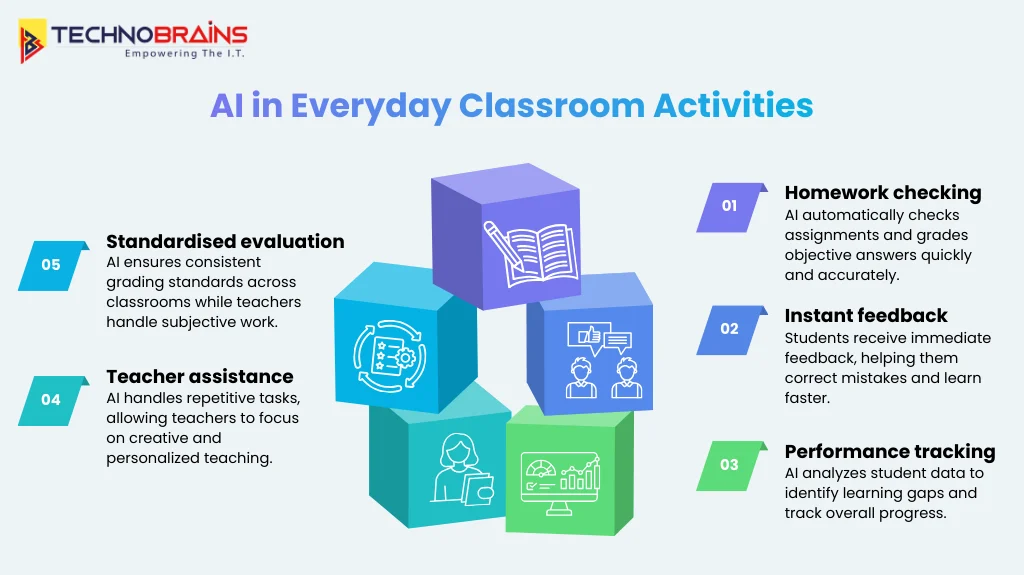
AI-driven educational software evaluates student homework by reading their handwritten work, finding mistakes, and then applying grading standards in a uniform way. The system minimizes the need for manual evaluation, especially when dealing with subjects that have clear right and wrong answers.
Faster and Clearer Feedback for Students
Using education software, students receive instant feedback about their performance. The process of making early corrections helps students develop better comprehension while also sustaining their active participation in learning.
Performance Tracking for Teachers
AI education software solutions evaluate classroom outcomes to show instructors which students need more help and which subjects students commonly misunderstand. The information enables instructors to make appropriate changes to their instructional strategies.
Human Review for Creative and Subjective Work
AI manages repetitive duties, but teachers evaluate student essays and answers to open-ended questions. Human judges must interpret creative works because machines cannot yet achieve this ability.
Consistent Evaluation Across Classrooms
Education software ensures equal evaluation standards throughout different classes but enables teachers to make necessary judgment calls when special situations arise.
Planning to build AI-driven education software for your school or platform?
Talk to an Expert!
What AI Homework Grading Looks Like in Real Schools?
In many Chinese schools, AI homework grading is already part of the daily routine. It focuses on speed, consistency, and teacher support, not on removing human involvement.
Scanning Work
AI systems use cameras or special equipment to capture handwritten student work for their homework assessment process. The system can identify text, mathematical symbols, and numeric values across various notebooks and worksheets.

Checking Answers
The system initiates the process to compare student responses with expected answers after completing the scanning process. The system detects all incorrect steps together with missing components and common errors that students make in mathematics and science subjects.
Applying Scores
The system uses established assessment criteria to determine student grades through an automated process. The system guarantees that all assessment procedures remain consistent throughout educational environments while decreasing the amount of work that teachers must perform.
Giving Feedback
Students receive immediate feedback, which shows them both their mistakes and aspects that need development. The rapid response enables students to understand their errors while the lesson remains fresh in their minds.
Teacher Review
Teachers maintain their active participation in the evaluation process at points where they need to make critical decisions. The manual evaluation process of essays and creative projects, together with subjective answers, ensures that learning quality remains intact.
Saving Time
AI systems manage grading processes that require repeated execution, thus decreasing the workload that teachers face. The system enables teachers to devote more time to their teaching responsibilities, their role as student mentors, and their work of supporting students.
The Role of AI in Supporting Human-Led Teaching
Many education leaders have voiced their opposition to the idea that artificial intelligence will replace teachers in classrooms. Chris Phillips, Vice President and General Manager of Education at Google, has stated that AI is meant to support teachers by reducing routine work, not replacing the human role that learning depends on.
Students can use Gemini and other similar tools to create personalized learning experiences that help them develop a deeper understanding of concepts. AI systems provide different explanations, which enable students to explore topics while teachers maintain control over classroom discussions, student assessment activities, and their development of relationships with students.
AI-powered educational software takes over tasks such as grading and basic analysis, which allows teachers to concentrate on their mentoring work, personal student support, and development of interesting teaching methods. Schools and educational institutions considering AI adoption should also factor in the cost to develop an app or platform that integrates these tools effectively.
The Role of Education Software in Scaling AI Adoption
AI thrives through collaboration within educational environments because its most significant value comes from its integration with existing teaching tools and administrative systems. Chinese educational institutions implement AI technology through their educational platforms, assessment systems, and administrative software, which operate as integrated components.
A well-designed education program uses artificial intelligence grading systems together with student data and lesson creation tools, and reporting functions to establish a unified operational framework. The solution enables teachers to work more effectively because it simplifies the process of implementing new software across multiple locations.
In modern educational software, schools can implement artificial intelligence across their complete educational system by providing access to different educational levels and various academic fields. The platform-first design approach of this system enables educational institutions to implement AI technology according to the latest educational trends.
IntelliCamp – Smart School Management System
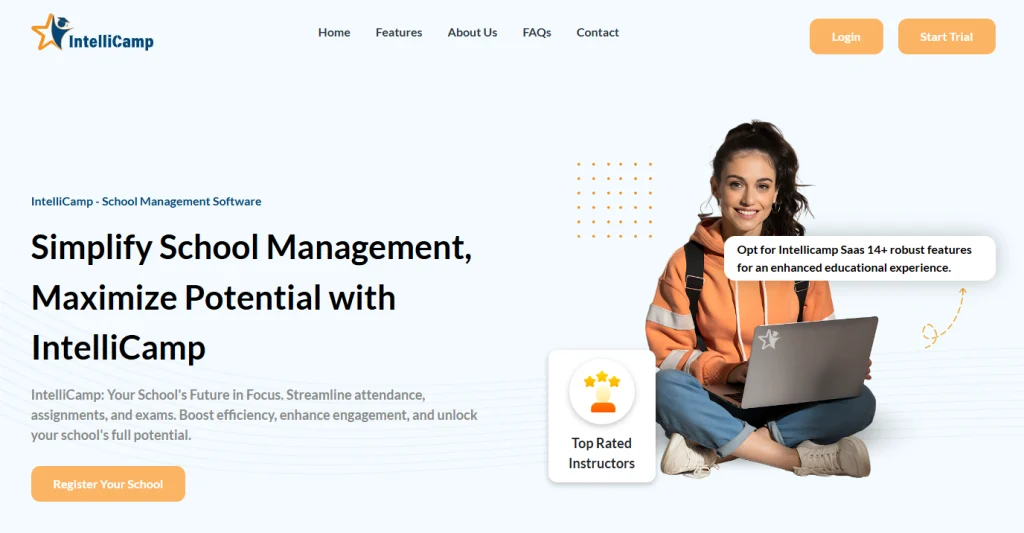
Developed by TechnoBrains, the IntelliCamp enables schools to handle their operational needs through the system’s capability to monitor both volunteer activities and student attendance and participation records. Schools gain time efficiency because their staff members can focus on educating students and assisting them when the system performs tasks automatically.
Benefits of AI-Driven Education Software for Schools
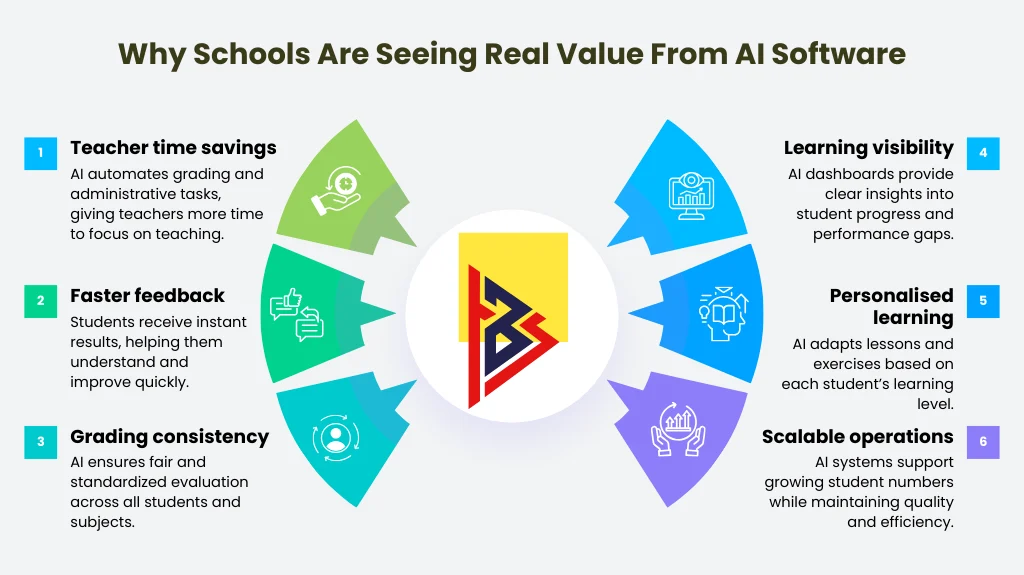
When schools adopt AI-driven education software through well-designed education platforms, the value extends beyond automation. The system achieves better operational performance together with improved understanding and learning results.
Teacher Time Savings
AI-powered educational software systems handle the fundamental responsibilities of grading, reporting, and administrative work management. The system eliminates repetitive tasks, which results in increased time availability for teachers to instruct their students.
Faster Feedback
Students get immediate assessment results for their completed tasks. When students receive rapid feedback, their comprehension abilities improve because they study material that is currently being taught.
Grading Consistency
AI-based systems establish standard evaluation criteria that teachers use to assess student performance in different courses. Teachers need to assess particular grading scenarios that require their decision-making skills, but this process helps create reliable assessment methods.
Learning Visibility
AI-driven dashboards provide educational institutions with complete visibility into student performance metrics. The system allows schools to track student progress while identifying areas for development and implementing effective intervention methods.
Personalised Learning
Generative AI solutions create exercises that change according to each student’s learning progress. Teachers can use the system to deliver customized instruction to students while they handle their regular teaching responsibilities.
Scalable Operations
AI-powered educational software provides institutions with essential tools to handle their grading operations, feedback systems, and student performance evaluations. The system maintains its educational standards during student population growth because it uses AI-driven education software.
Challenges Schools Must Address Before Using AI
The education system must address several issues before adopting artificial intelligence educational software, which offers significant advantages. The educational tool requires evaluation to establish its educational effectiveness and potential educational risks.
Accuracy and Reliability of AI Systems
AI generally performs well for structured tasks but can struggle with handwriting recognition, complex answers, and ambiguous situations. Custom AI solutions help educational institutions create systems that fulfil their specific curricular requirements and boost their operational dependability.
Risk of Bias in Automated Evaluation
AI-based education software learns from data, and the results become unfair when datasets contain either insufficient data or unbalanced data. Regular audits, together with diverse testing methods, need to be conducted because they serve as necessary measures that help decrease bias.
Student Data Privacy and Security
Schools must establish secure systems that protect student data through their implementation of transparent data handling practices. AI integration establishes secure connections between platforms while ensuring the protection of data throughout the process.
Over-Reliance on Automation
Excessive reliance on AI systems often leads to negative effects on how people make decisions. Human judgment and empathy serve as essential components of education, which require teachers to receive AI support instead of being replaced by it.
Teacher Readiness and Training
Teachers must receive proper training to ensure effective use of AI. Educators need clear guidance that shows how to use AI for instructional purposes while keeping control of student learning outcomes.
What Schools and EdTech Companies can Learn from Large-Scale AI Adoption?
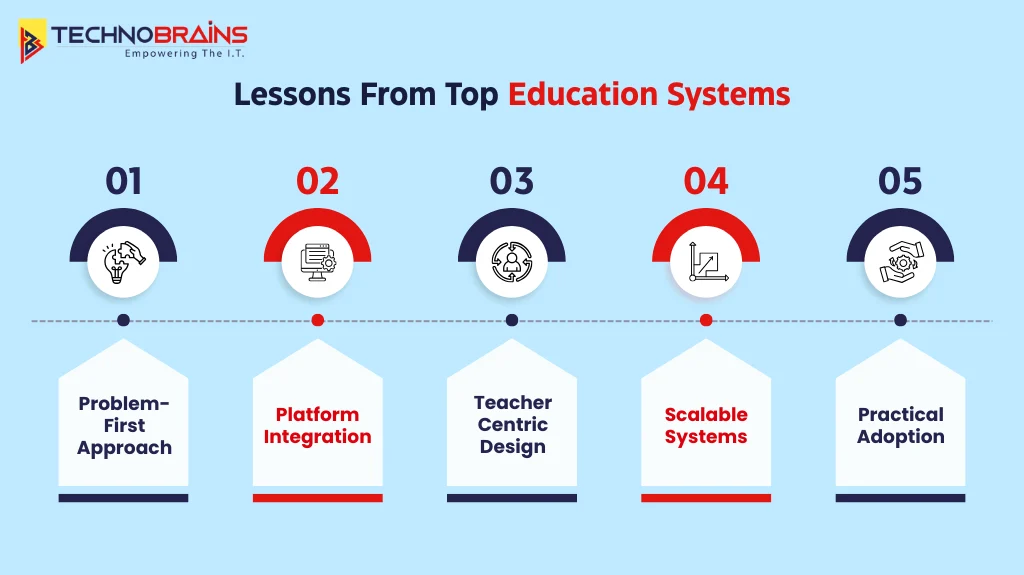
China’s use of AI education software demonstrates that organizations need to focus on solving large-scale business challenges instead of testing new technologies for success. Schools began their journey by implementing basic solutions, which helped them to address their most inefficient processes, which included grading, providing feedback, and tracking student performance. All educational institutions and education software developers worldwide should use this practical method as their primary teaching method.
Even the best tools will not operate effectively when users lack the necessary training to use them. Teachers who complete AI consulting services will learn about AI functionality and its appropriate usage while learning to use technology for their workload management.
Need a secure and scalable education software solution for your institution.
Get a Free Consultation!
Key Lessons for Schools and EdTech Companies
| Focus Area | What Leading Education Systems Did | What Others Should Do |
|---|---|---|
| Problem First | Used AI to reduce grading and admin workload | Start with real classroom pain points |
| Platform Approach | Integrated AI into education software systems | Build AI within existing school platforms |
| Teacher Control | Kept teachers involved in final decisions | Design AI as a support tool, not an authority |
| Scalability | Built systems for large student populations | Plan for scale from day one |
| Adoption | Made AI part of daily workflows | Focus on usability and training |
How Education Software Companies Can Apply These Lessons
EdTech companies create solutions that show practical value while they can expand their operations and take responsibility for their actions. Schools are not looking for complex AI demonstrations. They need systems that operate reliably to enhance efficiency and protect data while they integrate into classroom activities.
At this stage, experienced partners become essential for organizations. TechnoBrains Business Solutions provides custom education software development services that help organizations build platforms that combine automated systems with human monitoring. Development teams create AI education software solutions that develop educational institutions through their seamless connection to existing school operations.
Conclusion
Large education systems have demonstrated how AI-driven education software can operate at scale, offering valuable insights for schools globally. The AI system enables teachers to focus on student engagement and mentorship through its automation of grading and performance assessment tasks.
The main takeaway for educational institutions and EdTech companies is that educational software systems that protect data security and human control of operations deliver accurate results through their use of Artificial Intelligence.
A trusted partner like TechnoBrains assists organizations in developing educational software that can expand their operations while using artificial intelligence functions that meet real classroom demands. The implementation of artificial intelligence in schools can be accomplished through responsible AI systems, which provide teachers with their essential needs while enabling smooth system integration.
Frequently Asked Questions: AI-Driven EdTech System
Schools use an AI educational system to manage homework grading and student progress evaluation, and provide instant evaluation results to reduce teachers’ assessment workload.
The AI homework grading system evaluates student performance by comparing their answers to predetermined scoring criteria, which also identifies their incorrect responses. Most educational institutions hire AI developers to create and maintain their systems.
Yes, the AI edTech system works as a teacher support system because it handles their daily responsibilities, which creates extra time for teachers to interact with students and conduct instructional activities.
It offers multiple benefits, including time-saving features with standardized assessment methods to provide a complete learning progress tracking system and multiple operational solutions.
Implementing AI educational software in schools creates problems because the systems fail to produce accurate results, introduce bias problems, and because schools need to safeguard student data, and because schools rely too heavily on automated systems.