Hiring today is not just about filling roles faster. Teams are expected to screen better candidates, reduce manual effort, and keep the hiring experience smooth from start to finish. That is one of the biggest reasons, 46% of organizations expect to use AI in HR in 2026, and 87% of CHROs expect AI adoption in HR to grow this year.
This shift is happening because companies want more than automation. They want smarter hiring systems that can help with sourcing, screening, scheduling, and decision-making without slowing recruiters down. A report also shows that 92% say AI is accelerating the integration between HR and technology functions, making this change difficult to ignore.
That is why AI recruiting software is becoming a practical investment for businesses that want to hire faster and more consistently. But choosing the right solution is not just about adding AI features. It is about understanding the value, cost, compliance needs, and long-term fit before making a decision.
What is AI Recruitment Software and Why is it Important?
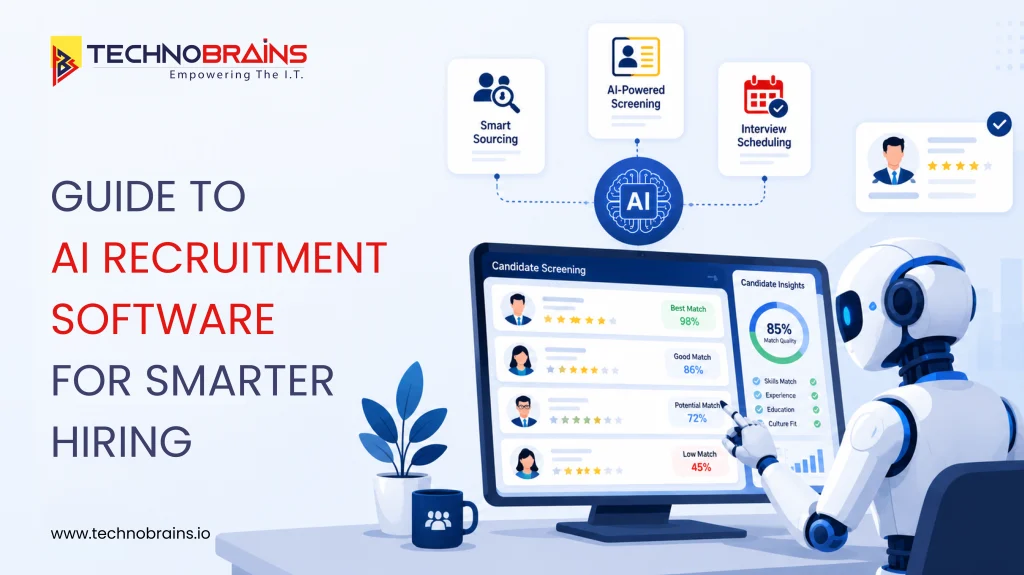
AI recruitment software helps hiring teams manage their recruitment operations through advanced and efficient capabilities. The system utilizes machine learning, natural language processing, and automation technologies to perform multiple functions, which include candidate sourcing and resume screening, job role matching, and interview scheduling. It enables recruiters to manage their increasing hiring demands because the system automates time-consuming tasks that would otherwise require their attention.
- It enables teams to process high volumes of applications through automated processes, which require less human input.
- The system reduces time consumption, which occurs during automatic processes that include resume screening, candidate shortlisting, and interview scheduling.
- The system enables recruiters to expedite their assessment of suitable candidates throughout the hiring process.
- The system provides organizations with a standardized hiring process that ensures consistent employee evaluation across multiple departments and job functions.
- The system allows recruiters to dedicate more time to engaging with candidates while they make better hiring decisions.
How AI Recruiting Software Works Across the Hiring Process
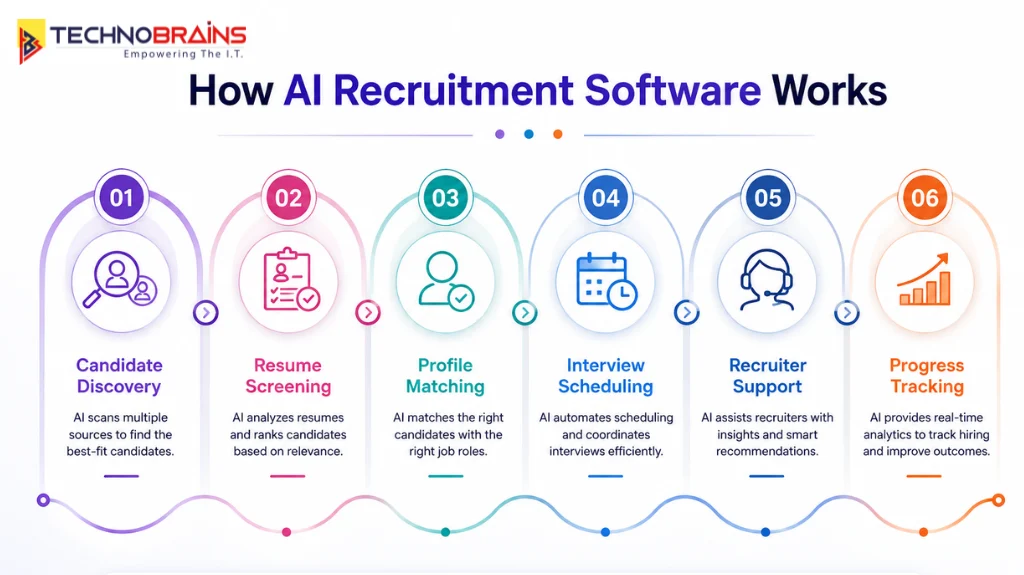
AI recruiting software works really well across all the stages of the hiring process. It does a lot of tasks for the recruiters, like finding candidates, checking applications, and scheduling interviews. The main thing it does is help recruiters find the candidates and keep all the records organized.
Finding Candidates
This platform is excellent for recruiters to find candidates. It looks at job boards, talent pools, and internal databases so recruiters do not have to search. This way, recruiters can find candidates quickly and easily.
Screening Resumes
The software looks at resumes. It picks out important information, like skills, experience, and qualifications. This helps recruiters go through applications faster and focus on the ones.
Matching Profiles
AI recruiting tools can match candidate profiles with the job requirements. They show the matches, which makes it easier to choose candidates. This saves a lot of time because recruiters do not have to check each applicant one by one.
Scheduling Interviews
The system handles interview scheduling, like sending invitations and reminders, and checking if candidates are available. This way, recruiters do not have to talk to candidates much, and the recruitment process goes smoothly.
Supporting Recruiters
It meant to help recruiters, not replace them. It does all the tasks, so recruiters have more time to talk to candidates and make good hiring decisions.
Tracking Progress
Some platforms let teams see how they are doing in the hiring process. This helps recruiters track candidates. Find out where things are going wrong.
Build Smarter Hiring Workflows With AI
Make your recruitment process faster, more organized, and easier to manage with the right AI solution built around your business needs. Get in Touch!
Must-Have Features in AI Recruitment & Hiring Software
Not every hiring platform that uses AI is actually useful in day-to-day recruiting. The ones that make a real difference usually help with the parts of hiring that slow teams down the most. A strong hiring software saves time, reduces manual effort, and makes things easier for recruiters to move good candidates through the process without losing control of quality.
- Smarter Sourcing: A good platform should help recruiters find candidates from job boards, internal databases, and talent pools easily. Finding candidates should not take much time.
- Faster Screening: Screening resumes is a boring task. Good AI recruiting software should scan resumes, pick out details, and help recruiters focus on the good candidates.
- Stronger Matching: The software should not just look for keywords. It should compare candidate profiles with job requirements in a way that choosing candidates feels right.
- Easier Scheduling: Scheduling interviews can be a mess. A good system should help with invitations, reminders, and availability so recruiters do not have to spend much time managing calendars.
- Better Visibility: Good AI hiring software should help teams see what is happening in the hiring process. When recruiters can track progress, spot delays, and see where candidates are dropping off, it becomes easier to improve the process.
Key Benefits for Recruiters and HR Teams
The software enables recruiters to work more quickly while maintaining their organizational tasks and dedicating more time to personal interactions, rather than performing repetitive work. When used well, it can make hiring feel less chaotic and a lot more efficient, especially when businesses choose to hire AI developers who understand how to tailor these tools for smarter, data-driven talent acquisition.
- Faster Screening: It helps companies work faster and helps teams look at applications quickly, find candidates, and reduce the time resume screening time.
- Better Matches: IT helps recruiters find candidates who are a good fit for the job by looking at the skills and experience they need.
- Less Admin: Hiring can be a lot of work, with a lot of time spent following up with people, setting up meetings, and giving updates. The AI hiring software reduces the amount of work so recruiters can focus more on making decisions.
- Clearer Insights: The AI talent acquisition software gives companies an understanding of what is going on. It helps teams see trends in recruitment and find problems, which helps them make decisions.
How Much Does Recruitment Software Cost?
The cost depends on how advanced the platform is, what you need, and whether you need only AI integration to connect it with your existing systems.
| Business stage | Typical cost range | What this usually means |
|---|---|---|
| Small teams | $15–$75 per user/month | Basic hiring workflows, lighter automation, fewer integrations |
| Mid-sized teams | $100–$200 per user/month | Stronger reporting, better automation, and more workflow flexibility |
| Enterprise teams | $200–$600+ per user/month or custom pricing | Advanced automation, deeper integrations, compliance controls, and tailored support |
Hidden Costs to Consider Before Investing
The sticker price is only one part of the budget. With recruiting software, extra costs usually show up during setup, rollout, and day-to-day use.
Implementation fees
- Initial setup can be billed separately.
- Onboarding may not be included.
- Configuration work can raise the first-year cost.
Data migration
- Old candidate data may need cleanup.
- Record mapping can take extra effort.
- Migration support is often charged separately.
Integration charges
- ATS and HR tool connections may cost extra.
- Custom API work usually adds more expense.
- Third-party platforms are not always included.
Training and adoption
- Teams may need paid training sessions.
- Change management can add to the rollout cost.
- Low adoption can reduce ROI if support is weak.
Add-ons and overages
- Extra storage may come at an added fee.
- Premium features are often sold separately.
- Usage limits can increase pricing over time, so it is worth checking what is actually included before buying AI-powered recruitment software.
How to Choose the Right AI Recruitment Software for Your Business
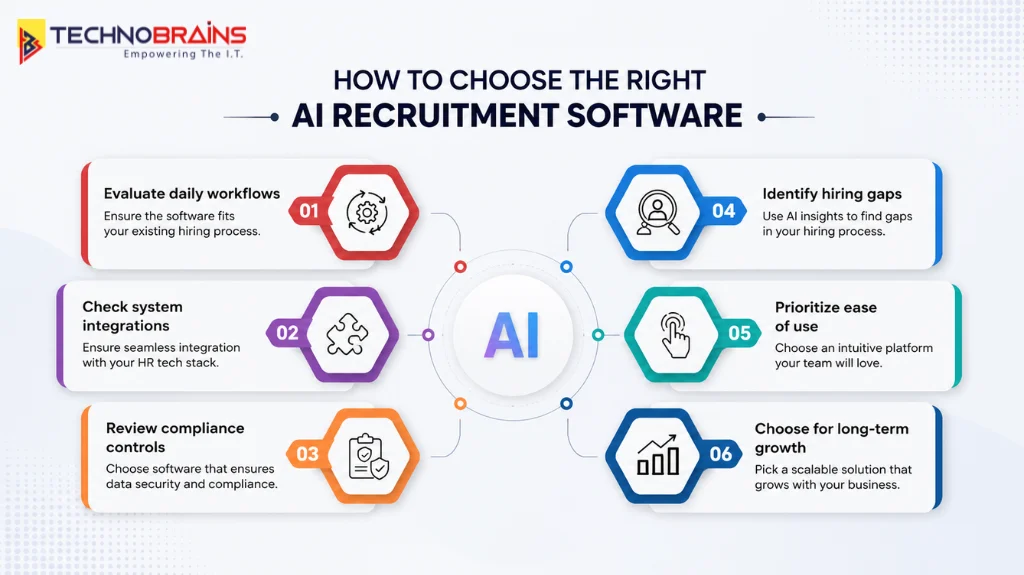
The right tool should fit naturally into the way your team hires. If it looks great in a demo but feels hard to use in real hiring, it will only create more friction.
Start with your needs
Begin with the problems your team is already dealing with, like slow screening, too much manual follow-up, or poor visibility across the pipeline.
Check the workflow
Look at how the platform supports sourcing, screening, scheduling, and communication. Good AI hiring software should make the process feel lighter for recruiters, not more confusing.
Look at integrations
The software should work well with your ATS, HR tools, calendars, and other systems you already rely on. If those connections are weak, your team may still end up doing too much manual work.
Review compliance
With AI talent acquisition software, it is important to check how the platform handles data, decision visibility, and fairness controls. Strong features matter, but trust and transparency matter too.
Think long-term
It helps to choose a platform that can grow with your hiring needs instead of one you may outgrow too quickly. Some businesses also compare vendor flexibility with a custom software development company when they want a setup that feels more tailored.
Find the Right AI Recruitment Solution for Your Business
From screening to scheduling, TechnoBrains helps you build practical hiring systems that support better decisions and long-term growth. Contact TechnoBrains.
Recruiting Software Challenges and Compliance Requirements
This is the part many teams do not contemplate early enough. Software compliance requirements matter because hiring decisions involve fairness, privacy, and clear accountability.
Bias risks
If the system is trained on weak or unbalanced data, it can carry those patterns into screening. That is why regular testing and fairness checks are important.
Limited visibility
Recruiters should be able to understand why candidates are being ranked or flagged. If the logic feels unclear, it becomes harder to trust the system.
Data privacy
These tools handle resumes, contact details, and assessment data every day. That makes secure storage, access control, and privacy practices a real priority.
Human oversight
Good AI recruiting software should help recruiters move faster, but it should not replace human judgment. Final hiring decisions still need a human review.
Vendor checks
Before buying, ask what controls, audits, and documentation the vendor can actually provide. Some teams also look at AI agent development services when they want more control over how the system works.
Conclusion
Companies use AI to improve their hiring processes because its most beneficial aspect lies in its ability to support daily recruitment operations. The system provides three advantages to the hiring process because it enables quick candidate evaluation while decreasing required manual work and establishing better organizational methods.
As a leading HRMS software provider, TechnoBrains allows organizations to develop hiring systems that provide practical solutions that can grow with their needs while meeting their actual workforce requirements.
As hiring becomes increasingly digital, organizations require solutions that provide assistance for both their recruitment activities and their complete human resource functions as they transition towards online hiring methods. The solution matching process for your company needs research, so you should reach out to us today for assistance.
Frequently Asked Questions
Some of the most useful features of AI recruitment software include resume screening, candidate matching, interview scheduling, reporting, and recruiter collaboration tools. These are the features that usually make the greatest difference in day-to-day hiring.
Yes, that is one of the biggest reasons companies use it. It can take care of repetitive tasks like shortlisting, follow-ups, and scheduling, so recruiters can spend more time speaking with candidates and making better hiring decisions.
No, not at all. Small and mid-sized businesses can also benefit from it, especially when hiring starts becoming harder to manage manually. The main difference is that larger companies usually need more advanced workflows and controls.
Start with your actual hiring problems first. Then look at ease of use, integrations, scalability, and support. The best platform is the one your team can use daily, not the one with the most features