Get 40 Hours Free Developer Trial
Test Our Developers for 40 Hours at No Cost - Start Your Free Trial →
Top 30 Mobile App Ideas That Will Generate Revenue in 2026
The mobile app industry continues to grow because mobile apps enable consumers to shop, make payments, work, and engage with digital content. Some resources project that the global mobile application market will exceed $330 billion by 2026. This growth shows strong mobile-first adoption and increasing corporate investment in application-based solutions. In 2026, user and business […]

08 Feb, 2026
Top 30 Mobile App Ideas That Will Generate Revenue in 2026
The mobile app industry continues to grow because mobile apps enable consumers to shop, make payments, work, and engage with digital content. Some resources project that the global mobile application market will exceed $330 billion by 2026. This growth shows strong mobile-first adoption and increasing corporate investment in application-based solutions.
In 2026, user and business needs remain the central focus for profitable applications as operating systems and technology evolve. Companies adopt AI-based tools and business automation platforms, and on-demand services because these solutions provide operational efficiency, improved customer experiences, and financial benefits.
For startups and founders, success comes from two main activities. They must select ideas that existing markets demand while developing solutions that can grow during practical implementation. The blog presents 30 mobile app concepts that businesses can use to meet their operational needs and generate revenue in 2026 and beyond.
Why Mobile App Ideas Are More Profitable in 2026?
Mobile apps generate higher revenue in 2026 as users expect instant access and businesses leverage faster MVP app development to launch, validate, and monetize ideas quickly.
Mobile-first behavior dominates
In today’s world, mobile apps serve as the primary contact point through which users complete shopping activities, handle payment transactions, book services, and oversee their work responsibilities.
Businesses actively pay for efficiency
Companies invest in applications that decrease manual labour and optimize operations while providing better customer service. The business world considers efficiency improvements as valuable when they can show measurable results.
AI makes apps smarter and more valuable
The use of artificial intelligence delivers three main benefits, which include automated processes, customized experiences, and immediate data access, which together increase user interaction and help users adopt advanced system capabilities.
On-demand expectations drive usage
Mobile gaming apps thrive on the limitless adoption rates attained from the overall inbuilt human capability for instantaneous information processing.
Recurring revenue models are proven
The company’s business model now generates consistent revenue through subscriptions, usage-based pricing, and marketplace sales instead of relying on customers to make single product purchases.
Faster development and easier scaling
The combination of modern frameworks and cloud infrastructure enables faster international deployment of custom mobile applications. Businesses can expand their capabilities while entering new markets and acquiring more customers without conducting an extensive redesign.
Strong demand for practical solutions
Applications that deliver real-world solutions take precedence over products that follow current market trends. The creation of specific user solutions enables businesses to achieve better user interaction and more reliable profit results.

Have an App Idea You Want to Build?
Turn your idea into a scalable mobile app with the right strategy and execution.
Talk to our Experts!
Mobile App Ideas With High Revenue Potential in 2026
Here are mobile app ideas that businesses and startups are actively investing in because they solve real problems, scale across markets, and offer clear monetization paths.
Work and Productivity Apps
Individuals and organizations rely on work and productivity applications because these software solutions provide dependable operational efficiency improvements, which decrease their work demands.
AI personal assistant application
This platform combines multiple functions that users can access from a single interface. The business generates revenue through its subscription model and additional paid features.
Project management app for small teams
The app enables teams to manage tasks, track progress, and collaborate using task boards and schedules. Monthly subscriptions support customized features built through Android app development for industry-specific needs.
Resume and job coaching app
This platform uses artificial intelligence to enhance resume content for better job applications and to prepare users for their upcoming interviews while identifying their skills deficiencies. The system generates revenue through its multiple subscription levels and its additional paid features that customers can purchase.
Business and Enterprise Apps
Enterprise-focused apps offer stable revenue because businesses prioritize efficiency, control, and measurable outcomes. In 2026, companies are investing heavily in scalable mobile apps to replace manual workflows and fragmented systems.
Inventory management app
This app helps businesses track stock, manage suppliers, and avoid shortages using mobile dashboards. It is widely used in retail, logistics, and manufacturing with subscription-based revenue.
Human resource management app
The HR app manages attendance, leave, payroll, and internal communication in a mobile-first format. It suits growing businesses and supports long-term subscriptions through iOS app development.
Expense tracking app for businesses
This app offers real-time expense tracking by categorizing spending and syncing with accounting systems. It helps finance teams improve cost control and financial visibility.
AI-Powered Apps
AI has moved from experimentation to everyday use. In 2026, AI-powered apps that deliver practical value are seeing higher adoption and stronger monetization.
AI customer support app
This system automatically handles basic inquiries while forwarding more complicated matters to support agents, which enables companies to decrease their customer service expenses. The service generates revenue through two pricing models, which include usage-based charges and tiered subscription fees.
AI learning and skill development app
The platform provides personalized educational content that adapts to user progress and performance metrics. The system works best with subscription-based business models and corporate training partnerships.
AI sales forecasting app
This system uses historical data to forecast demand, which results in better planning precision. The system attracts valuable business clients who establish lasting contracts.
On-Demand Service Apps
On-demand apps align perfectly with modern expectations for speed and convenience. These mobile app ideas to make money thrive in mobile-first and urban markets.
On-demand home services app
This platform connects users to cleaning and plumbing service professionals. The company generates revenue through its commission system, its featured listings, and its service subscription model.
Food and grocery delivery app
Food and grocery delivery apps grow by focusing on local vendors and fast, reliable delivery. Revenue comes from commissions, delivery fees, and subscription perks through effective food delivery app development.
Car wash and vehicle care app
Modern vehicle care applications drive repeat usage while generating stable revenue through their ability to let users schedule car washing and maintenance services at their home or workplace.
eCommerce and Marketplace Apps
eCommerce and marketplace apps remain some of the most scalable because they directly connect users with products or services and generate revenue from every transaction. In 2026, success in this category depends on specialization, trust, and mobile-first shopping experiences.
Niche eCommerce app
Niche eCommerce apps target specific products or audiences such as fashion, wellness, or local brands. They build higher loyalty and conversions, with revenue from product sales, subscriptions, and exclusive access models.
Service marketplace app
Service marketplace apps connect professionals with customers seeking services like consulting, design, or home repairs. They generate revenue through commissions, featured listings, and provider subscriptions.
Second-hand and resale marketplace app
Resale marketplace apps enable users to buy and sell pre-owned products securely. Growing demand for sustainable shopping drives revenue through transaction fees, promoted listings, and seller subscriptions.
Not sure which app idea will work best?
Get clarity on features, cost, and monetization before you start building.
Get a Free App Consultation!
Health and Wellness Apps
Health and wellness apps perform well due to their long-term personal value. In 2026, demand is strongest for apps offering personalization, privacy, and measurable results.
Mental wellness app
Modern mental wellness applications enable users to control their stress levels while enhancing their ability to concentrate, which generates revenue for the application through subscription fees that provide access to premium features.
Nutrition and meal planning app
Nutrition apps support users in planning meals, tracking calorie intake, and developing healthy eating habits. The company generates income through its premium features, which include personalized plans and service integrations.
Fitness training app
Fitness training apps offer structured workout programs with progress tracking and coaching support. Users pay through subscriptions, premium plans, and trainer partnerships, making it a strong use case for developing a sports app.
Mobility and Smart Living Apps
Mobility and smart living apps are gaining traction as cities become more connected and users expect convenience in transportation and urban services. These ideas align with smart city initiatives and mobile-first lifestyles.
Smart parking app
The platform displays real-time parking space status to users who want to make digital payments. The business generates revenue through three different channels, which include usage fees, subscription services, and partnerships with parking operators.
EV charging locator app
The platform helps users locate charging stations and create route plans. The company’s income stream derives from its premium service offerings and partnerships with charging network operators.
Public transport tracking app
The platform provides real-time schedules that track current routes while delivering service disruptions. The service generates revenue through advertising and partnerships and by offering premium features to commuters.
Lifestyle and Everyday Utility Apps
The success of lifestyle applications depends on their ability to provide continuous value through their seamless integration into users’ daily life activities. The users of 2026 prefer applications that simplify their life tasks instead of introducing additional challenges.
Personal finance and budgeting apps
These apps help users track expenses, manage budgets, and improve spending habits. Revenue is generated through subscriptions, premium content, and reports.
Event discovery apps
Event discovery apps allow users to find local and interest-based events. They earn revenue through ticketing partnerships, paid listings, and subscriptions.
Language learning apps
Language learning apps offer mobile-first lessons with gamified and personalized content. They generate revenue through subscriptions and premium access.
How to Choose the Right App Idea?
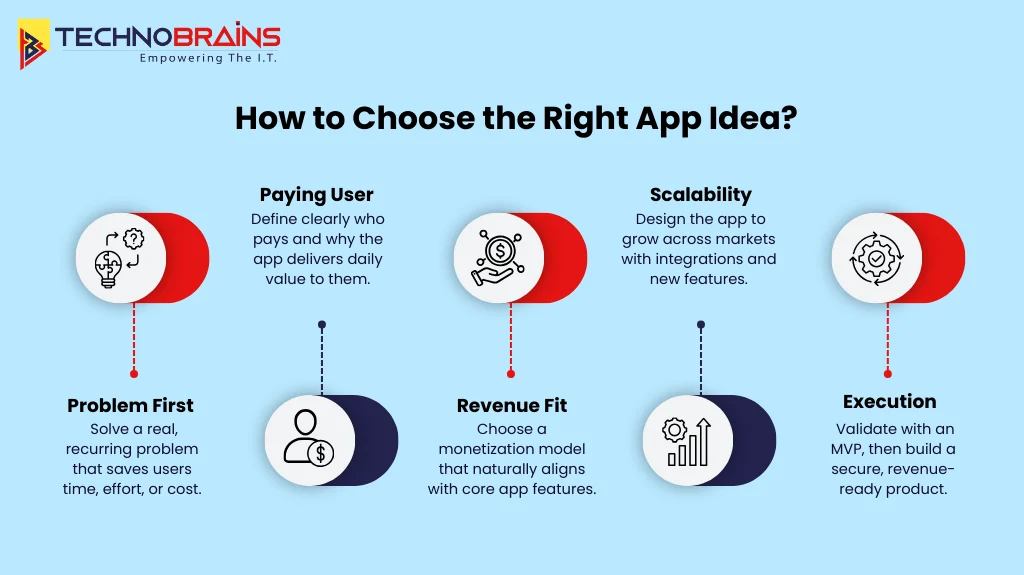
Choosing the right app concept requires understanding which current market trends should be avoided and which existing applications should not be duplicated. The most trending mobile application concepts emerge from authentic user problems because developers can use Artificial Intelligence to discover user challenges through statistical data and future prediction methods.
- Problem First: Profitable mobile app ideas begin by solving a real daily problem. Users encounter problems that need solutions that remove operational inefficiencies and eliminate delays, and cut unnecessary expenses.
- Paying User: Success relies on clearly identifying who will pay. Business applications improve efficiency through their functionality, whereas consumer applications generate revenue when users ascertain a daily value sufficient for payment.
- Revenue Fit: The initial business model of any company should establish its monetization methods, which include subscription services, usage-based fees, commission systems, and premium product features. The revenue model should develop organically from the main features of the product.
- Scalability: A strong app concept should scale across markets, industries, and regions. Business growth depends on the ability to adapt through new integrations and the introduction of new features, making it suitable for on-demand app development services.
- Execution: The successful execution of an idea requires proper implementation. The development process begins with an MVP, which undergoes user validation testing before the team builds a secure revenue-generating application through their advanced development skills.
Monetization Models for Mobile App Ideas
Explore mobile app monetization methods like ads, in-app purchases, subscriptions, and freemium models to boost engagement and generate recurring revenue.
| App Category | Primary Monetization Model | Secondary Revenue Streams |
|---|---|---|
| Work and Productivity Apps | Monthly or annual subscriptions | Premium features, integrations, and team licenses |
| Business and Enterprise Apps | Subscription licensing | Custom deployments, API access, analytics add-ons |
| AI-Powered Apps | Usage-based pricing | Premium AI features, data insights, and enterprise plans |
| On-Demand Service Apps | Commission per transaction | Featured listings, service subscriptions |
| eCommerce Apps | Product sales margin | Subscriptions, exclusive access, upsells |
| Marketplace Apps | Commission-based fees | Seller subscriptions, promoted listings |
| Health and Wellness Apps | Subscription plans | Personalized programs, premium content |
| Fitness and Training Apps | Monthly subscriptions | One-on-one coaching, advanced plans |
| Mobility and Smart Living Apps | Pay-per-use fees | Monthly passes, partnerships |
| EV and Smart Transport Apps | Premium access | Route optimization, partner promotions |
| Lifestyle and Utility Apps | Freemium upgrades | One-time purchases, premium tools |
| Education and Learning Apps | Subscription-based access | Certifications, advanced modules |
| Finance and Budgeting Apps | Premium analytics | Bank integrations, advisory services |
| Real Estate and PropTech Apps | Listing fees | Featured placements, analytics reports |
| Super Apps | Transaction commissions | Membership plans, bundled services |
Ready to build a revenue-generating mobile app?
Work with a mobile app development partner that focuses on real results.
Start your Project!
Why Technobrains is the Right Mobile App Development Partner
A great app idea succeeds only when developed the right way. Technobrains, a top mobile app development company, assists companies in constructing applications that provide actual value to users through user-friendly design and future-proof development. The team dedicates itself to solving actual customer problems instead of delivering new functionalities.
With extensive experience in productivity software, AI-based solutions, online marketplaces, and business software, Technobrains develops mobile applications that match user behavior patterns. The team creates solutions that perform well, are easy to use, and can expand their capabilities in actual environments.
What makes Technobrains a trusted partner is its collaborative approach with clients. The team connects with projects from their initial planning stage through MVP development up to product launch and ongoing enhancements. The system helps companies to operate at higher speeds while maintaining efficiency. It enables them to minimise typical errors and create applications that produce enduring benefits for their business.
FAQs
What are the most profitable mobile app ideas in 2026?
The most profitable app ideas in 2026 solve real problems in business automation, AI, marketplace app development, health and wellness, and on-demand services, delivering clear efficiency and cost savings.
How do I choose the right app idea to make money?
Choose an app idea by validating a real problem, identifying paying users, and defining a clear monetization model, especially for scalable e-commerce app development solutions.
Are AI-powered apps profitable for startups?
Yes, AI-powered apps are highly profitable when used to automate workflows, personalize user experiences, or improve decision-making. Businesses are willing to pay for AI solutions that deliver measurable efficiency gains and long-term cost savings.
How much does it cost to develop a mobile app?
The cost to develop a mobile app depends on features, complexity, and platform. A basic MVP may cost less, while advanced apps with AI or third-party integrations require a higher investment. Many companies control costs effectively by starting small and scaling through custom software development solutions.
What monetization models work best for mobile apps?
The most effective monetization models include subscriptions, commission-based marketplaces, usage-based pricing, and premium feature upgrades. Apps with recurring revenue models are more sustainable over the long term.
How long does it take to build a mobile app?
Most enterprise mobile apps take 3 to 6 months to build an MVP. More complex apps may take longer depending on features, integrations, and scalability requirements.
Why should I work with a mobile app development company?
A mobile app development company helps turn an idea into a scalable product by handling design, development, testing, and launch. Businesses can also accelerate delivery by choosing to hire Android developers with relevant experience, improving speed and reducing execution risk.